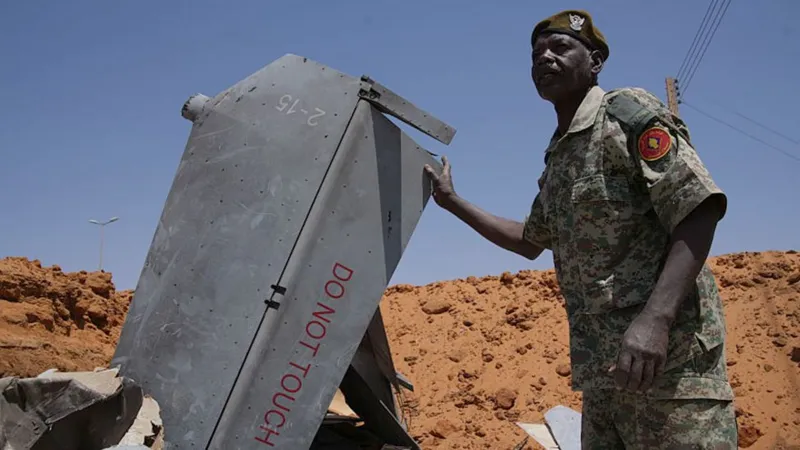
A drone strike hit a funeral gathering in a cemetery in the Sudanese city of El Obeid. At least four people were killed and several others were injured. Two rights groups, Sudan Doctors Network and Emergency Lawyers, reported the incident. They blamed the Rapid Support Forces for the attack. The group has not issued any response.
Series of Attacks in One Night
Emergency Lawyers said the cemetery strike was part of a wider wave of drone attacks that began on Wednesday evening. At least 23 people were killed across different locations during this period.
The group also reported strikes on residential homes, an airport area, and zones near a military base. Civilians were among the dead in these locations. In one residential area, several houses were destroyed and people were trapped under collapsed roofs.
A local resident told AFP that destruction was severe. He said survival inside some homes seemed unlikely after the strikes.
Civilian Casualties Reported
Rights monitors said thirteen civilians were killed when people gathered near damaged homes. Earlier strikes killed five more civilians. In another incident, a truck driver carrying food supplies was killed when his vehicle was hit.
The attacks in El Obeid have continued for several days, according to Emergency Lawyers and Sudan Doctors Network. Both groups described repeated targeting of civilian areas.
Strategic Importance of El Obeid
El Obeid lies in the Kordofan region, an oil rich area divided into North Kordofan, South Kordofan, and West Kordofan. The city sits between territory controlled by the army and areas held by the Rapid Support Forces.
Because of this location, it has become a key frontline in Sudan’s ongoing civil war, which has lasted for three years. Control of this region is seen as vital due to its oil resources and transport routes.
Humanitarian Crisis Deepens
The conflict in Sudan has created one of the worst humanitarian emergencies in the world. More than 11 million people have been displaced from their homes. Around 28 million people are facing severe food shortages.
Reliable death counts remain unavailable. Estimates suggest at least 50,000 people have died since the war began.