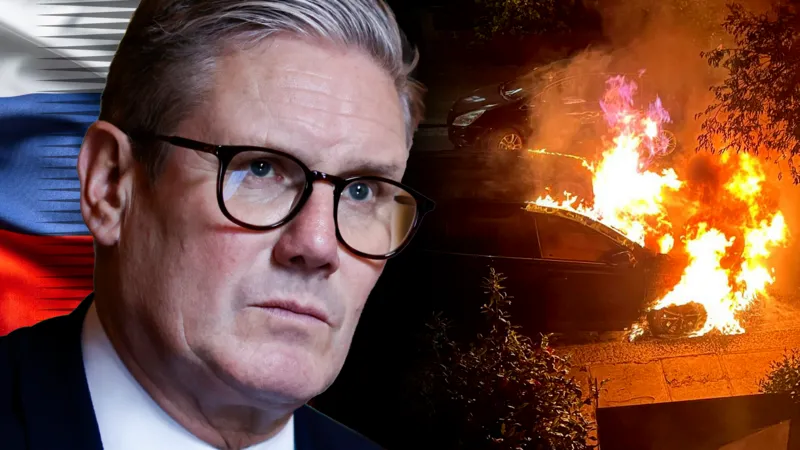
Russian network behind suspected UK sabotage
A new investigation has uncovered evidence suggesting that a series of sabotage related incidents in the United Kingdom may be linked to an organised operation with ties to Russia. The findings point to a wider effort involving online coordination, misinformation, and targeted disruption.
Arson attack linked to coordinated online operation
One of the central cases involves an arson attack on property associated with the UK prime minister. A young Ukrainian builder was convicted for conspiracy after being drawn into the operation. Messages reviewed during the investigation suggest he was directed remotely by an anonymous handler.
The handler reportedly encouraged the attacker after the incident and promised financial support while urging him to leave the area quickly. However, law enforcement arrested him within hours.
Fake accounts used to spread division
Investigators found that the wider campaign relied heavily on social media platforms and encrypted messaging apps. Fake online personas were created to imitate political and religious groups. These accounts were then used to encourage vandalism and deepen social tensions within the UK.
Some false narratives about the arson incident were also circulated online and amplified by influential online figures, further spreading confusion around the motive.
Handler role and recruitment methods
The handler, identified through investigative work as a young individual connected to Russian state circles, allegedly offered incentives such as money and citizenship to recruit participants for further disruptive acts. Communications also included expressions of support for Russian leadership and state goals.
The investigation suggests that this figure may be linked to a broader network of state aligned information operations.
Court verdicts and investigation findings
Two individuals have been convicted at the Old Bailey for conspiracy related to the arson incidents. A third suspect was found not guilty of conspiracy charges.
Authorities believe the case is part of a wider pattern of remote coordination, where individuals are influenced or recruited online to carry out acts intended to create instability.
The investigation highlights growing concerns about digital recruitment tactics and the use of misinformation campaigns to influence real world events.