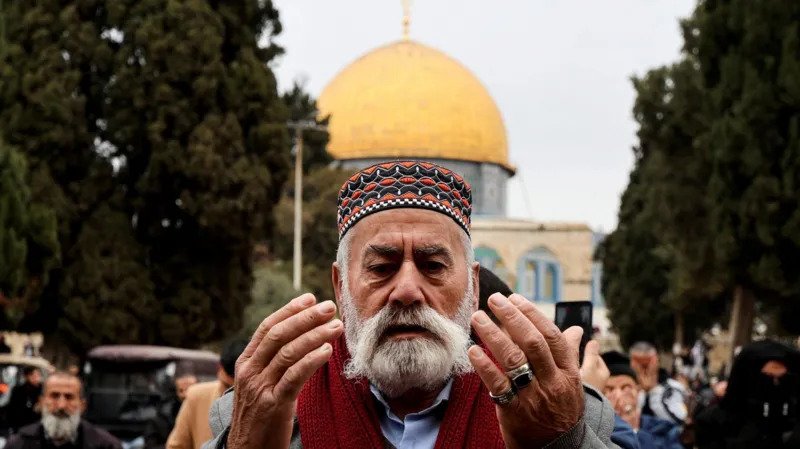
A long-standing arrangement that governs access and worship at Jerusalem’s Al-Aqsa mosque compound is facing renewed pressure as Israeli nationalist groups challenge existing rules at the site.
The compound, known to Muslims as Al-Haram al-Sharif and to Jews as the Temple Mount, is among the most sensitive religious locations in the world. It is home to the Dome of the Rock and Al-Aqsa mosque, both deeply significant in Islam and Judaism.
Israeli Nationalists Challenge Long-Standing Rules
A small group of religious Jews recently entered the compound and engaged in prayer and singing, actions that go against the established Status Quo agreement. Among them was Israeli politician Moshe Feiglin, who publicly supported building a new Jewish temple on the site.
His remarks and actions directly contradict long-standing arrangements designed to maintain stability at the location.
What the Status Quo Agreement Says
Under the current framework, a Jordanian Islamic trust known as the Waqf manages the site. Muslims are allowed to pray freely there, while non-Muslim visitors may enter but are not permitted to perform religious rituals.
Most major rabbinical authorities in Israel also discourage Jewish prayer at the site, based on religious law. These rules have been in place for decades to reduce tension at the compound.
Growing Debate Over Future Control
Recent reports suggest discussions among some political circles about changing the status of the site. One idea under discussion is to describe the compound as a shared religious space for multiple faiths.
These claims have raised concern among religious leaders and political observers who fear such changes could increase tensions in the region.
US officials have stated they are not aware of any formal policy shift, although some diplomats have previously spoken about religious and historical ties to Jerusalem’s holy sites.
Why the Site Matters Globally
Because of this shared significance, any change in access or control has wide political and religious implications.