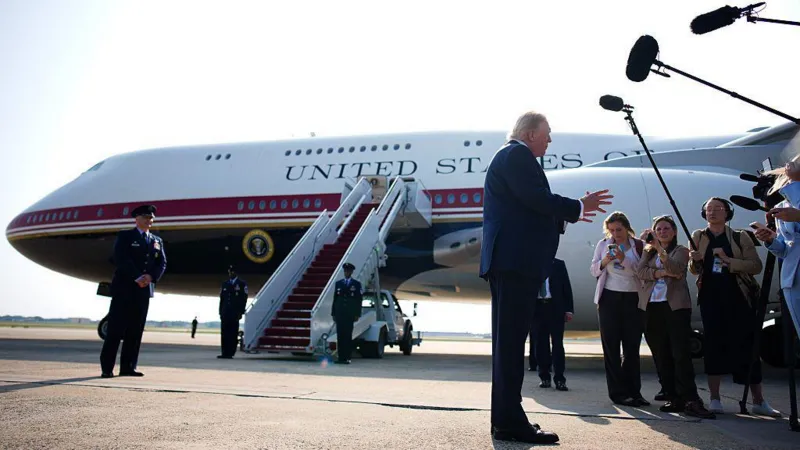
Several journalists from The New York Times have been ordered to testify before a federal grand jury after reporting alleged security concerns involving President Donald Trump’s new Air Force One aircraft.
The newspaper reported that federal agents delivered subpoenas to some journalists, requiring them to appear before the grand jury as part of an investigation into possible illegal leaks of classified information.
The case has created a debate in the United States over national security, government transparency, and press freedom.
Reports Raise Questions About New Air Force One Security
The controversy began after The New York Times published reports about security concerns linked to a new aircraft gifted by Qatar for use as Air Force One.
According to the reports, US security officials raised concerns that the aircraft did not include some advanced protection systems required for presidential travel.
The Secret Service reportedly advised President Trump to return from a NATO summit using an older aircraft instead of the newer plane because of these concerns.
The reports were based on information from unnamed sources familiar with the situation.
Justice Department Investigates Alleged Information Leaks
The US Department of Justice said the investigation is focused on identifying individuals who may have illegally shared classified information.
Officials stated that journalists reporting the information are not the main targets of the investigation. Instead, the focus is on those who may have provided restricted government information.
The department said protecting classified information is necessary to maintain national security.
New York Times Defends Journalistic Work
David McCraw, a senior lawyer for The New York Times, criticized the subpoenas and argued that the action could pressure journalists from reporting important information.
He said journalists have a responsibility to inform the public about government decisions, especially when they involve national security and taxpayer-funded projects.
The newspaper defended its reporting and said its journalists were working to provide facts about how the government operates.
Debate Over Press Freedom and Classified Information
The situation highlights a long-running debate in the United States about the balance between protecting government secrets and protecting freedom of the press.
The US Constitution provides protections for journalists to report information that serves the public interest. However, government agencies argue that leaking classified information can create serious security risks.
Legal experts say cases involving reporters and classified information often involve complex questions about national security and media rights.
Other Media Reports Air Force One Concerns
Other news organizations, including CBS News, also reported concerns about the aircraft’s security capabilities.
A former US government official reportedly said there was not enough time or funding to complete all necessary upgrades before the aircraft could fully meet Air Force One security requirements.
These reports increased public discussion about the safety and readiness of the new presidential aircraft.
Conclusion
The Trump Air Force One report has led to a major discussion about government security, classified information, and the role of journalists in a democracy.
While officials continue investigating the alleged leaks, The New York Times maintains that its reporting serves the public’s right to know how important government decisions are made.
The case will likely continue to draw attention as questions remain about press freedom and national security responsibilities.