The US Treasury Department is expected to expand secondary sanctions against companies and countries that continue doing business with Iran, according to a person familiar with the plans. The move would widen Washington’s economic pressure on Tehran and could affect businesses outside Iran.
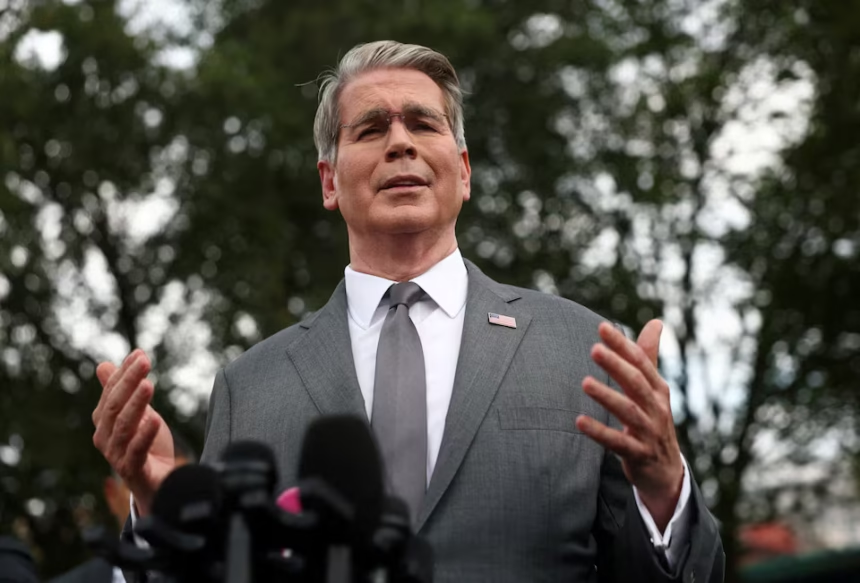
Treasury Secretary Scott Bessent is expected to provide more details at a press conference on Monday. The planned measures are part of a wider US campaign aimed at cutting Iran’s access to international finance and putting pressure on countries that continue economic ties with Tehran.
US Expands Iran Sanctions
The Treasury Department plans to broaden the activities that can trigger secondary sanctions linked to Iran. These sanctions can target foreign companies, banks and other entities that conduct certain business with sanctioned Iranian interests.
A person familiar with the plans said Washington wants to send a clear warning to countries that continue economic ties with Tehran. The person spoke anonymously because they were not authorized to discuss the plans publicly.
The planned measures could cover additional types of Iran related activity. Some activities carried out in third countries could also face sanctions, although the Treasury has not publicly identified every category.
The United States has used sanctions against Iran for decades. Previous measures have targeted oil revenues, aviation, military procurement, cryptocurrency activity and businesses linked to Iran’s Islamic Revolutionary Guard Corps.
Quick Facts
| Detail | Information |
|---|---|
| What happened | The US plans to expand secondary sanctions linked to Iran. |
| Where | Washington, with possible effects on businesses and banks in other countries. |
| When | August 24, 2026 |
| Who is involved | US Treasury Secretary Scott Bessent, President Donald Trump and Iran. |
| Current status | Further details were expected from the US Treasury. |
| Why it matters | Foreign companies and financial institutions could face greater exposure to US sanctions. |
What Bessent Is Expected to Announce
Bessent was scheduled to discuss the Iran measures during a press conference at 1 p.m. EDT on August 24. The information provided in the Reuters report describes the announcement as expected, so the final details should be checked against the Treasury’s official statement.
Bessent has described the wider economic campaign as an “economic D Day.” He has also called the planned measures the “toughest sanctions in history.”
The Treasury is expected to warn banks and other financial institutions that continued support for Iran could put their access to the US financial system at risk.
US Targets Iran’s Financial Network
US sanctions already place major restrictions on Iran’s access to the dollar based financial system. Iranian networks have also used front companies, alternative shipping arrangements and other methods to avoid sanctions.
The Treasury says it has continued targeting networks connected to Iranian oil sales and sanctions evasion. Recent US actions have included sanctions against companies, individuals and vessels involved in Iranian oil and financial networks.
The new measures could make it easier for Washington to target foreign entities that help Iranian businesses move money or conduct restricted transactions.
Impact on China
China is one of the countries that could face greater pressure from the expanded sanctions.
The United States has already sanctioned Chinese independent refineries involved in buying Iranian oil. Washington has also targeted vessels linked to the transport of Iranian crude.
The more serious step would involve sanctions against banks in China or other countries that help process transactions involving Iran. Such action could create tension between Washington and Beijing.
The timing is also important because Trump and Chinese President Xi Jinping are expected to meet in Washington in late September. New measures against Chinese financial institutions could add pressure to the wider US China economic relationship.
China has already said it will monitor the situation and protect its interests. Chinese Foreign Ministry spokesperson Lin Jian called for restraint and said pressure and sanctions would not help resolve international disputes
Trump Tightens Economic Pressure on Iran
The Trump administration has increased economic pressure on Iran as the conflict between Washington and Tehran approaches the six month mark.
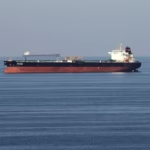
The fighting has disrupted energy shipments through the Strait of Hormuz, a major route for global oil and other energy supplies. The disruption has contributed to higher energy prices and increased pressure on international markets.
Iran has rejected the US pressure. Iranian officials have argued that sanctions will not force Tehran to accept Washington’s demands
Secondary sanctions can affect companies outside the United States. A foreign bank or company may face restrictions if it conducts transactions that Washington considers sanctionable.
That creates a difficult choice for businesses. They may have to decide whether continuing business with Iran is worth the risk of losing access to the US financial system.
The impact could be especially important for countries that maintain trade relationships with Iran. China is a major focus because of its role in Iranian oil purchases and regional trade.
Treasury to Reveal New Iran Sanctions
The next important step is the US Treasury announcement. Officials are expected to explain which activities and entities could face secondary sanctions.
The response from China, Iran and other countries will also matter. Businesses and banks will likely examine the new rules closely before deciding whether to continue transactions involving Iran.
The exact scope of the new sanctions should be treated as unconfirmed until the US Treasury publishes the formal measures