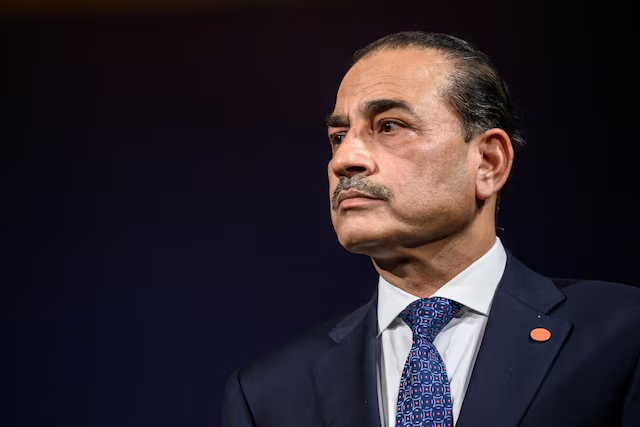
Pakistan Army Chief Field Marshal Asim Munir traveled to Tehran on Monday after speaking with U.S. President Donald Trump the previous week, according to three Pakistani sources. The sources said Trump initiated the call and asked Pakistan to use its influence to help bring Iran back to negotiations.
Munir’s Tehran visit comes as tensions between the United States and Iran remain high. Pakistan has maintained relations with Iran while also trying to mediate between Washington and Tehran, giving Islamabad a key role in efforts to reduce regional tensions.
As U.S.-Iran Tensions Increase, Asim Munir Visits Tehran
TEHRAN / ISLAMABAD — Chief of Army Staff Field Marshal Asim Munir and Interior Minister Mohsin Naqvi arrived in Tehran on Monday for high-level diplomatic talks focused on regional peace and easing escalating tensions between the United States and Iran.
According to an official statement from Inter-Services Public Relations (ISPR), the visit forms part of Pakistan’s ongoing diplomatic effort to promote stability and foster a comprehensive resolution to Middle East conflicts.
Diplomatic sources confirm that managing the delicate U.S.-Iran dispute remains central to the trip. Following high-level contacts between Washington and Islamabad, Pakistan has been asked to utilize its diplomatic channels to encourage Iranian leadership back to the negotiating table.
During the visit, the Pakistani delegation is scheduled to meet senior Iranian officials and key figures close to Iran’s top leadership to discuss bilateral security, border coordination, and nuclear negotiation pathways. Neither the White House nor U.S. state officials have issued formal comments regarding the underlying consultations.
Quick Facts
| Key Fact | Details |
|---|---|
| Main Development | Field Marshal Asim Munir traveled to Tehran amid rising U.S. Iran tensions. |
| Trump's Call | Donald Trump spoke with Munir before his Tehran visit. |
| Main U.S. Request | A Pakistani source said Trump wanted Pakistan to help bring Iran back to negotiations. |
| Pakistan's Role | Pakistan has been trying to mediate between the United States and Iran. |
| Tehran Visit | Munir arrived in Tehran with Interior Minister Mohsin Naqvi. |
| Other Issues | Talks were also expected to cover Saudi Arabia, Houthi attacks and regional security. |
| Main Challenge | A Pakistani source said there is a "trust deficit" between the U.S. and Iran. |
What Happened Before Munir's Tehran Visit?
Trump spoke with Munir last week, shortly before the Pakistani army chief traveled to Tehran. Two Pakistani sources said Trump initiated the conversation.
The call came after Trump warned countries against providing what he described as “any type of lifeline to Iran.” His administration has been seeking to increase pressure on Tehran.
Iran had threatened to shut down all oil exports from the Gulf. The disputers have raised concerns about regional conflict and the possible impact on energy supplies.
Pakistan has maintained trade relations with Iran despite the recent fighting. Islamabad has also played a mediation role between Washington and Tehran during the current crisis.
Earlier Pakistani efforts helped produce an interim peace agreement in June. The agreement later weakened as fighting between the United States and Iran resumed.
A Pakistani source described the main challenge as a lack of trust between the two sides.
“There is a trust deficit on both sides,” the source said, adding that Munir’s goal was to help reduce that gap.
Other Issues on Munir's Agenda
The Tehran visit was not expected to focus only on U.S. Iran tensions.
A Pakistani government source said Munir was also expected to discuss recent attacks by Iran aligned Houthi fighters against Saudi Arabia. The talks were also expected to cover the mutual defence agreement recently signed by Pakistan, Turkey and Saudi Arabia.
These issues are important for Pakistan because Islamabad has close relations with both Iran and Saudi Arabia. Pakistan’s diplomatic position requires it to manage ties with countries that have competing interests in the region.
Why the Asim Munir Tehran Visit Matters
Munir’s visit places Pakistan at the center of diplomatic efforts involving the United States and Iran. Islamabad has relations with both countries and has previously tried to help them communicate during periods of tension.
The outcome of the Tehran meetings could provide a clearer picture of whether Pakistan can help reduce the current trust gap between Washington and Tehran.
At the same time, the available information does not confirm whether Iran has agreed to return to negotiations.
Pakistan Continues Diplomatic Efforts
The next stage will depend on the discussions in Tehran and the response from both Washington and Tehran.
Pakistan is likely to remain involved in diplomatic efforts while trying to protect its relations with Iran, the United States, Saudi Arabia and Turkey.
For now, Munir’s Tehran visit shows that Pakistan is continuing to seek a diplomatic path as tensions between the United States and Iran remain unresolved.