
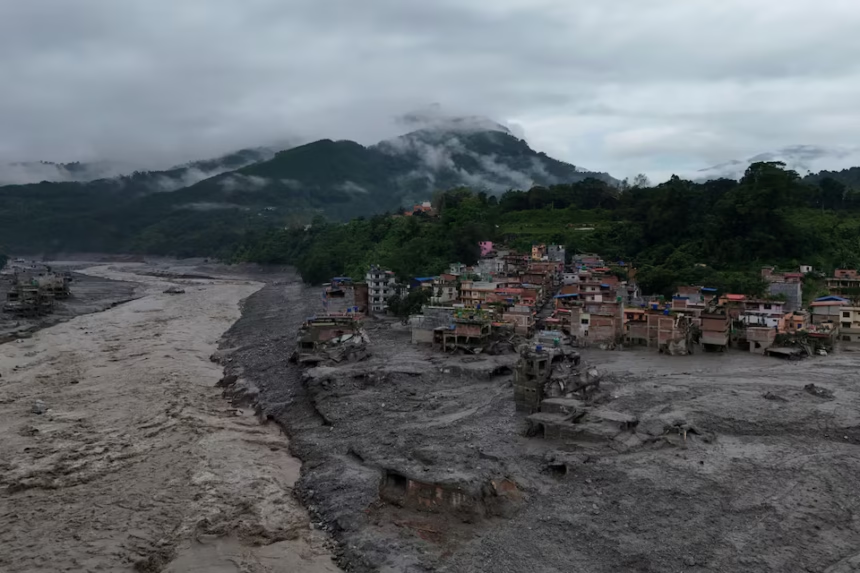
A devastating Himalayan flood in Nepal and China has killed hundreds of people and left more than 1,000 missing. A huge collapse of ice, rock and mud triggered the disaster near the Nepal China border on August 26, 2026.
Rescue teams are searching for survivors while helicopters deliver emergency supplies to isolated communities. Officials are also watching a newly formed lake that could cause another dangerous flood.
Quick Facts
| Detail | Information |
|---|---|
| What happened | A glacier collapse triggered a massive flash flood and debris flow. |
| Where | Nepal and Gyirong County in Tibet, China. |
| When | August 26 to 27, 2026. |
| Who is involved | Nepalese and Chinese authorities, rescue teams, local residents, pilgrims and foreign visitors. |
| Current status | At least 359 deaths were reported in Nepal, with more than 1,000 people missing across Nepal and Tibet. |
| Why it matters | More flooding remains possible as water builds behind debris blocking the river. |
Hundreds Killed in Himalayan Flood
The Himalayan disaster has caused widespread destruction across mountain communities in Nepal and Tibet.
Nepalese police reported 359 deaths after the flood swept through valleys and settlements. Many bodies were carried downstream into the plains.
Rescue workers continue to search damaged areas for survivors. Helicopters are also carrying food and other emergency supplies to communities cut off by destroyed roads and bridges.
Nepal’s Home Minister Sudhan Gurung said rescue teams had found 100 missing Indian visitors and 25 Chinese workers in the worst affected area around Trishuli.
Nearly 550 foreign nationals remained unaccounted for at the time of the report.
The missing foreign visitors came from more than two dozen countries.
The reported figures included 288 people from India, 63 from the United States, 51 from Malaysia, 34 from Australia, 33 from Britain and 25 from Canada.
In Tibet’s Gyirong County, Chinese state media reported 558 people missing. That figure included 260 foreign nationals.
China reported three deaths in the affected Tibetan area.
Chinese Premier Li Qiang visited Gyirong on August 27 as authorities assessed the damage and rescue situation.
Officials said the disaster also affected important roads, buildings, power infrastructure and border facilities.
Authorities in both countries are coordinating search and rescue efforts.
Glacier Collapse Triggered the Flood
Officials said a high altitude glacier collapse caused the disaster.
A large mass of ice, rock and glacial material rushed down a mountain channel. The flow collected more debris as it moved downhill.
It eventually became a huge mudslide that reached areas on both sides of the Nepal China border.
Chinese government geologist Guo Zhaocheng said the debris flow traveled at around 50 metres per second. It also covered more than 20 kilometres.
New Flood Threat Along the River
Rescue teams now face another serious threat.
Nepal’s disaster management authority said debris had blocked the Bhotekoshi River. The blockage created a lake, and water levels continued to rise.
Officials warned that the lake could suddenly burst.
Chinese authorities reported a similar danger near Gyirong. The temporary lake there contained an estimated 2 million cubic metres of water on Thursday morning.
Another 3 million cubic metres of water could enter the lake over the next three days.
Officials expect the peak flow risk around September 1. Rainfall could increase the danger and make rescue operations harder.
Bodies Found Downstream
The flood carried victims far away from the original disaster zone.
Ganesh Aryal, an administrator in Nepal’s Chitwan district, said authorities had recovered 103 bodies from the river system.
Chitwan is about 100 kilometres from the worst hit area around Trishuli.
Local hospitals could not handle all the recovered bodies. District officials therefore prepared tents and other facilities for families collecting their relatives.
Pilgrims Among the Missing
Many people caught in the disaster were traveling toward Kailash Mansarovar in Tibet.
The region attracts Hindu and Buddhist pilgrims from several countries. Mount Kailash holds particular religious importance for Hindus, who associate it with Lord Shiva.
The affected route is also used by tourists and other travelers moving between Nepal and Tibet.
Tourism operator Sagar Pandey said the destruction in some areas was almost total. Hotels, restaurants, vehicles, and other buildings were swept away or buried.
Why Nepal’s Mountain Region Is Vulnerable
The disaster happened along a major mountain route connecting Nepal with Tibet.
The region contains steep Himalayan terrain, glaciers and rivers. These conditions can make communities vulnerable to sudden landslides, glacier collapses and flash floods.
The latest disaster shows how quickly a high altitude collapse can develop into a large debris flow.
Nepal also has experience responding to major natural disasters. The country faced another catastrophic event during the 2015 earthquake, which killed nearly 9,000 people.
Nepal Flood Rescue Efforts Continue
Rescue teams will continue searching for missing people across the affected valleys and river systems.
Authorities will also monitor the blocked rivers and temporary lakes. Residents near dangerous river sections may need to move to safer locations if water levels rise.
Officials are expected to provide updated death and missing person figures as rescue teams reach more areas.
The situation could change quickly if heavy rain causes the temporary lake to overflow or breach.
Rescue teams are searching for survivors while authorities prepare for another possible flood. The coming days will be critical for people living near the blocked rivers and newly formed lakes.