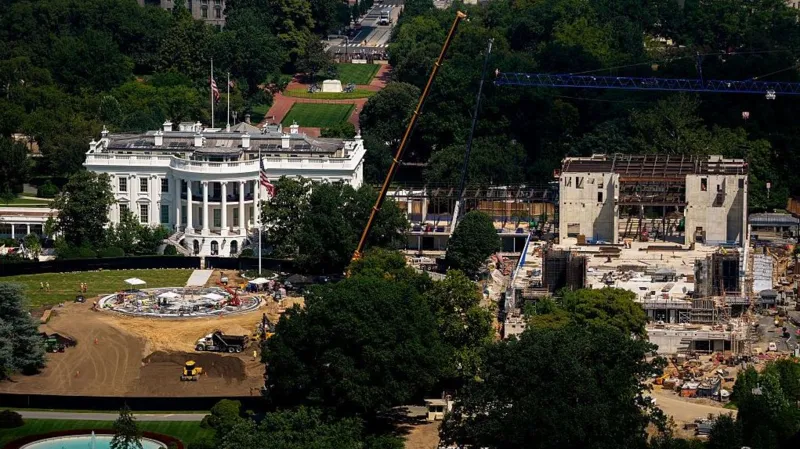
The US Supreme Court has allowed construction of President Donald Trump’s planned $400 million White House ballroom to continue. The 5-to-4 decision gives the Trump administration an important legal victory.
The ruling stops lower court orders that had blocked construction work. The Supreme Court did not make a final decision on whether the entire project is legal.
Quick Facts
| What happened | The US Supreme Court allowed construction of Trump's White House ballroom to continue. |
|---|---|
| Where | White House, Washington, DC |
| When | September 2026 |
| Who is involved | Donald Trump, the US Supreme Court, and the National Trust for Historic Preservation |
| Project Cost | About $400 million |
| Ballroom Size | About 90,000 square feet |
| Current Status | Construction can continue while the legal dispute develops. |
| Why it matters | The project has raised questions about presidential authority and the preservation of the White House. |
Supreme Court Allows Trump Ballroom Construction
The US Supreme Court ruled 5 to 4 in favor of the Trump administration. The decision allows construction of the aboveground section of the planned White House ballroom to continue.
The court said lower courts had likely gone beyond their authority when they stopped the project.
The justices did not decide whether Trump has the legal power to complete the project without approval from Congress.
Chief Justice John Roberts disagreed with the majority. He joined the court’s three liberal justices in dissent.
Roberts argued that the construction could be unlawful because Congress has not approved the project.
White House Ballroom Project Faces Legal Challenge
The planned ballroom will cover about 90,000 square feet. The White House has said that substantial work could finish by November. Full completion could take until August 2028.
Trump began the project after demolishing the historic East Wing last autumn.
The National Trust for Historic Preservation challenged the project in court. The group argued that the president does not have unlimited authority to demolish and redesign part of the White House complex.
The Supreme Court majority also ruled that the preservation group lacked standing to bring the lawsuit.
Trump has argued that the White House needs a larger space for major events. He has also pointed to security concerns as another reason for the project.
The planned ballroom has faced criticism from historic preservation groups. They say construction could cause permanent damage to an important national landmark.
Chief Justice Roberts said the concerns raised by preservationist Alison Hoagland were enough to allow the legal challenge to continue.
Legal Battle Over Ballroom Project Continues
Construction can now continue while the legal dispute develops.
Further court action could determine whether the Trump administration can complete the project as planned.
The Supreme Court has cleared the way for Trump’s $400 million White House ballroom project to continue.
The ruling gives Trump a major legal victory, but questions about presidential authority and congressional approval remain. The future of the project could depend on further legal proceedings.