The US National Highway Traffic Safety Administration (NHTSA) has opened an investigation into Tesla’s self-certification of its Cybercab robotaxi.
The regulator wants to know that Tesla used the correct process and technical information to show that the autonomous vehicle meets federal safety requirements.
The investigation comes just after Tesla began a limited commercial Cybercab service in Austin, Texas. Tesla has started with a small number of vehicles and plans to expand the service to more vehicles and locations.
Quick Facts
| What happened | NHTSA opened an investigation into Tesla's Cybercab self certification. |
|---|---|
| Where | Austin, Texas, where Tesla began limited Cybercab operations. |
| When | September 4, 2026 |
| Who is involved | NHTSA, Tesla and the Cybercab robotaxi program. |
| Current status | NHTSA is reviewing Tesla's certification process and technical data. |
| Why it matters | The investigation could affect Tesla's plans to expand its autonomous robotaxi service. |
NHTSA Examines Tesla Cybercab Certification
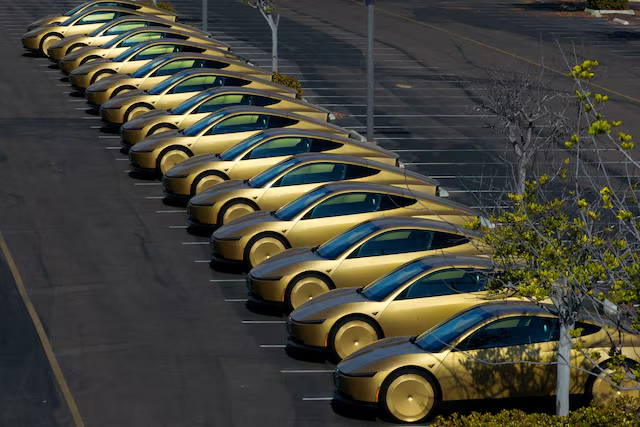
NHTSA is reviewing how Tesla certified up to 1,000 Cybercabs under federal motor vehicle safety rules.
The agency is also examining the technical data Tesla used during the process. Another key issue involves safety standards that Tesla considered not applicable to the Cybercab.
NHTSA Administrator Jonathan Morrison said the agency supports the safe development of automated vehicles. However, he stressed that manufacturers must follow federal laws.
Tesla Starts Cybercab Service in Austin
Tesla began commercial deployment of a small number of Cybercabs in Austin on Thursday. The two seat robotaxi represents a major step in the company’s autonomous driving plans.
Texas records showed 420 autonomous vehicles registered in the state as of Friday morning. That figure included 45 Cybercabs.
Tesla plans to gradually increase the number of vehicles and expand the service to other locations.
What We Know About Federal Rules
Current US rules do not require NHTSA approval before a fully autonomous vehicle operates on public roads if the vehicle still includes required human controls.
These controls can include a steering wheel, brake pedals and mirrors.
The rules also give NHTSA the power to approve exemptions for vehicles that do not have certain traditional controls. A manufacturer can receive permission for up to 2,500 such vehicles per year.
Tesla has not submitted an exemption petition for the Cybercab, according to NHTSA.
Amazon’s Zoox unit recently received an NHTSA exemption for limited commercial use of robotaxis without steering wheels.
That approval came in July and marked an important step for the autonomous ride industry.
Tesla’s situation differs because the Cybercab certification process is now the subject of a regulatory review.
Why This Investigation Matters
The investigation could become an important test for Tesla’s robotaxi strategy.
A regulatory review may affect how Tesla expands its Cybercab fleet. It could also draw more attention to how autonomous vehicles meet federal safety standards.
For the wider industry, the case highlights the importance of clear safety data and proper certification as companies bring driverless vehicles onto public roads.
NHTSA Probes Tesla Cybercab Certification
NHTSA will continue examining Tesla’s certification process and the information supporting it.
The agency has not announced a final finding in the investigation. Tesla’s future Cybercab expansion could depend partly on the outcome of the regulatory review.
The review will determine whether Tesla properly applied federal safety requirements when it certified the vehicle. For now, the investigation remains ongoing.