
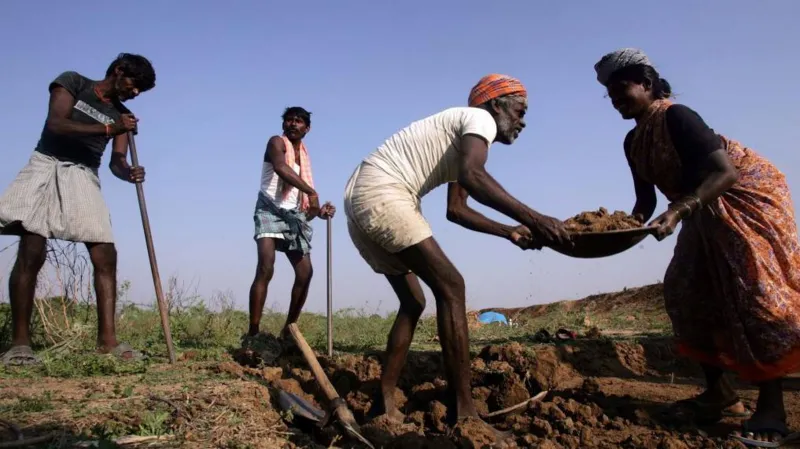
India runs one of the largest public employment programmes in the world, designed to protect rural families from poverty and income shocks. This jobs guarantee scheme has played a key role in supporting livelihoods across villages for nearly two decades.
The programme was launched in 2005 and gave every rural household a legal right to request paid manual work for up to 100 days each year. The goal was simple. Offer basic employment at minimum wages to families who struggle to earn stable income from farming and seasonal work.
This mattered deeply in a country where most people still live in rural areas. Around two thirds of India’s population depends directly or indirectly on agriculture, even though farming contributes only a small share to the national economy. For many families, farm income alone is not enough to survive.
Over time, the scheme became a safety net during hard times. It helped households manage droughts, price shocks, and job losses. During the Covid crisis, when millions of migrant workers returned to villages, demand for this work rose sharply. The programme helped prevent a deeper rural collapse.
The social impact has been widely studied. Research shows that it increased rural spending, reduced poverty levels, improved school attendance, and raised wages in some local markets. Women make up more than half of the workforce, and a large share of workers come from scheduled castes and tribes. These are groups that face long term social and economic disadvantage.
Although the current government once criticised the programme, it continued to rely on it during emergencies. Recently, however, a new law has changed both the structure and the name of the scheme. The Mahatma Gandhi reference has been removed, and the programme has been rebranded under a new framework.