
Hawaii’s Big Island Bans Feeding Feral Cats
Starting in the new year, Hawaii County will ban feeding feral animals on county property. The law aims to protect native species, including the endangered nene goose, from feral cats. These cats were introduced to the islands by Europeans in the 18th century.
A Long-Standing Practice
Many cat lovers oppose the ban. Liz Swan has fed feral cats on the Big Island for 33 years. “I don’t believe the cats should be harmed at the expense of the nene,” she said.
Estimates suggest tens of thousands of feral cats live on the Big Island, including abandoned pets and their descendants. Opponents argue the law could undermine efforts to trap and neuter the population, forcing cats to hunt for food.
Risks to Native Species
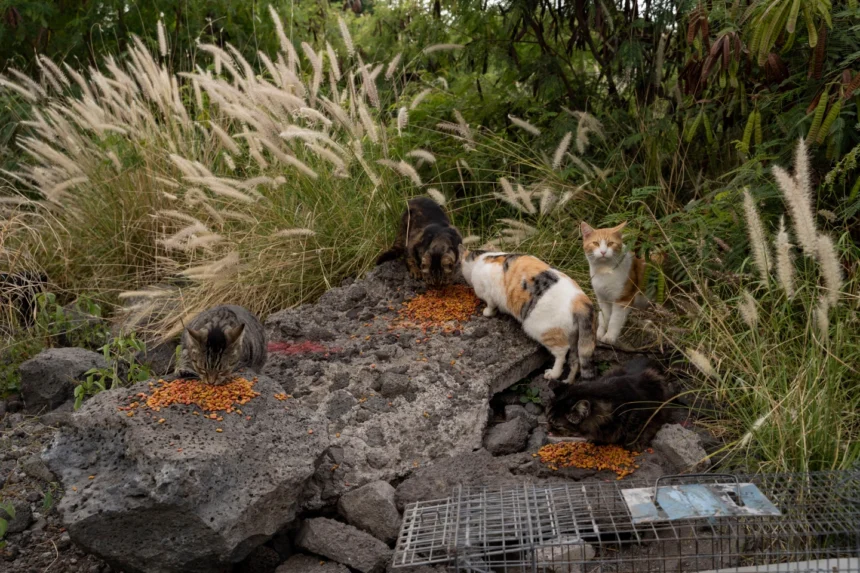
About 200 cats live at the Kealakehe Transfer Station and Recycling Center near Kona. Swan provides them with water and kibble. Biologists warn that feeding cats can threaten native species directly by predation, and indirectly by attracting native animals to humans. Cat feces can spread toxoplasmosis, a parasite that has killed Hawaiian monk seals and birds.
Last year, a male nene was killed by a car while crossing a road to reach a cat feeding station. The surviving mate, which lost its gosling to toxoplasmosis in 2024, has recently nested in Hilo with a new partner. The Department of Land and Natural Resources says the feeding ban will help protect them.
Conservation Perspective
State wildlife biologist Raymond McGuire monitors nene nesting sites near shopping centers. He has seen geese risk cars to reach food, while cats remain fed by humans. McGuire, a cat owner, said that protecting struggling native species must come first.
Hawaii’s ecosystem is especially vulnerable because many species evolved without mammalian predators. McGuire emphasized that preserving these species honors past generations who protected them.
Cultural and Legal Debate
Hawaiian culture connects closely with animals, noted Big Island Mayor Kimo Alameda. His family’s aumakua, or ancestral spirit guide, is a shark. Despite opposition, Alameda allowed the law to take effect without his signature. Violations carry fines from $50 to $500.
Some feeders fear they will need to work in secret. Cultural practitioner Makaʻala Kaʻaumoana said trapping and neutering cats does not stop them from hunting. Debbie Cravatta questioned why native species are considered more valuable than domestic cats. Swan said she would continue feeding cats regardless.