
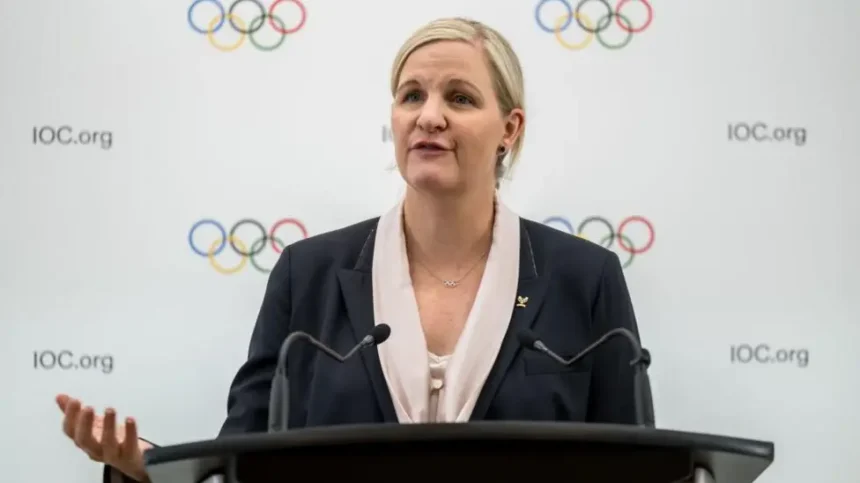
IOC announced in a statement that women’s sports will only be open to female biologicals starting with the Los Angeles Olympics of 2028. The IOC will determine eligibility through a once-in-a lifetime sex-test, which prevents transgender women or athletes with differences of sexual development from participating in the female categories.
The New Rules of Eligibility
Kirsty Cventry, IOC president, stressed that safety and fairness are key goals. Even the slightest margins of victory can determine a winner or loser. She said that biological males competing in events for women would be unfair and unsafe in certain sports.
The IOC uses the SRY test to detect the male-specific gene. The SRY gene is not present in the DNA of female athletes who test negative. Athletes who test positive for the SRY gene can still compete in mixed/open or male categories.
Previous Practices and Controversies
The IOC had previously left the sex-eligibility rules up to each sport. Tokyo 2020 will see the debut of transgender athletes, such as New Zealander Laurel Hubbard. By Paris 2024 however, there were fewer transgender athletes participating due to bans on several sports.
IOC’s new policy restricts DSD-affected athletes with the exception of complete androgen insensitivity (CAIS) which stops male puberty.
Reactions, Debate and Discussion
They argue that the genetic test ensures fairness, without forcing athletes to use hormones.The tests are invasive and can lead to false positives. They also violate the human rights of those who take them.
The IOC’s Decision
IOC analyzed scientific data for over 18 months. They consulted more than 1,100 athletes and spoke to competitors from around the world. The IOC concluded that the male gender provides an advantage to athletes in sports that rely on power, strength and endurance.
Coventry also stressed the respect for dignity of this process, which will only allow one screening per lifetime, as well as expert advice and counseling.
The Wider Impact
Athletes who have gone through the male puberty are already banned from participating in women’s categories by several sports federations.
These moves were influenced by legal rulings such as the UK Supreme Court’s definition of women based on biological sex.
Tests are not retroactive and the new IOC policy doesn’t apply to recreational or grassroots sports.