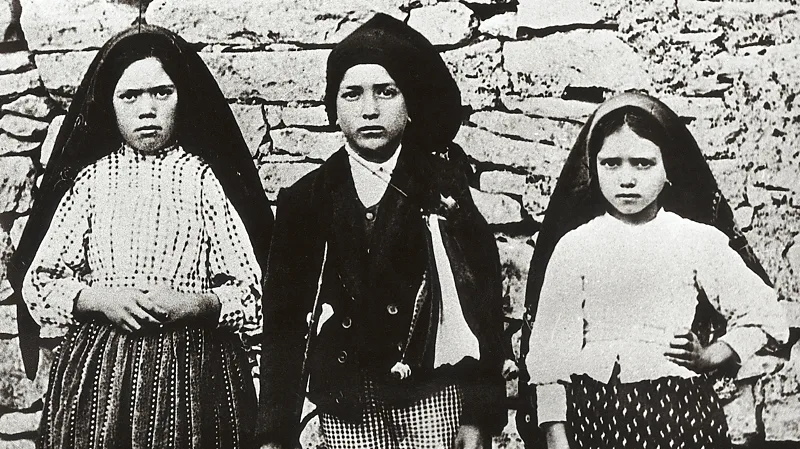
The children, Lucia dos Santos and her cousins Francisco and Jacinta Marta, said the glowing figure appeared near an oak tree and instructed them to return on the 13th day of each month for the next five months.
Their story quickly spread across Portugal and attracted thousands of believers. Over time, the reported visions became one of the most discussed religious events of the 20th century. Many people believed the messages contained warnings about war, faith, and the future of Russia under communism.
The “Miracle of the Sun” Drew Thousands of Witnesses
On 13 October 1917, a massive crowd gathered in Fátima to witness the final predicted appearance. Many people later claimed they saw extraordinary events in the sky.
Witnesses described the Sun changing colors, spinning rapidly, and moving like a wheel of fire. Some also reported seeing flower-like shapes falling from the sky. Others believed people with illnesses were suddenly healed during the event.
One witness recalled that the Sun appeared to spin faster and faster before returning to its normal position. While many people considered it a miracle, others suggested it may have been a natural atmospheric event or a case of mass psychological influence.
Despite the debate, the event left a strong emotional impact on those who attended. Fear, faith, and wonder spread through the crowd as people tried to understand what they had seen.
The Three Secrets of Fátima
The children claimed they received three important revelations during the apparitions. These became known as the “Three Secrets of Fátima.”
The first secret reportedly included a vision of Hell and warnings about future suffering and war. Many believers later connected it to the outbreak of World War II.
The second prophecy focused on Russia. According to the message, devotion and prayer could eventually save Russia from communism. Because the message emerged shortly before the Russian Revolution, it later gained major attention during the Cold War.
The third secret remained hidden inside the Vatican archives for decades. Its secrecy created worldwide speculation and increased global interest in Fátima. Many people believed it predicted major political and religious events of the 20th century.
How Fátima Became Linked to Anti Communist Beliefs
As communism spread across Eastern Europe and the Soviet Union grew stronger, the Fátima prophecies became closely tied to anti communist movements. Religious groups viewed the messages as spiritual warnings against atheism and Soviet ideology.
Although the Catholic Church initially reacted cautiously to the reports, it officially approved devotion connected to Fátima in 1930. From that point forward, the site became one of the world’s most visited religious pilgrimage destinations.
Today, the story of Fátima continues to spark debate between believers, historians, and scientists. Some see it as a powerful spiritual event, while others view it as a historical mystery shaped by faith and human emotion.