Political Challenges Cast Shadow Over Iran’s World Cup Campaign
Iran has entered the FIFA World Cup under unusual circumstances, with political tensions affecting the team’s preparations and overall experience. Although a recent agreement helped reduce hostilities between Iran and the United States, the atmosphere surrounding the tournament remains sensitive.
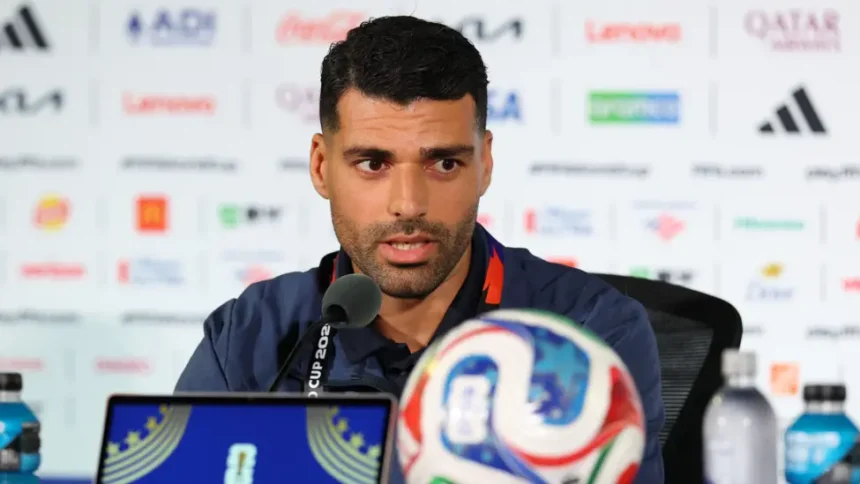
Iranian striker Mehdi Taremi admitted that the ongoing situation has taken some of the excitement away from football’s biggest event. According to him, the pressure began even before the team arrived in the United States.
He explained that the squad felt the tension from the start of its World Cup journey. As a result, the players faced additional challenges while preparing for the competition.
Visa Issues and Relocation Disrupt Preparations
Months of uncertainty forced Iran to change its World Cup base camp plans. Initially, the team intended to stay in Tucson, Arizona. However, concerns regarding visas, security, and the political climate led officials to relocate the camp to Tijuana, Mexico.
The move created logistical difficulties and reduced the team’s preparation time before the tournament. Iran’s head coach, Amir Ghalenoei, acknowledged that these challenges affected the squad’s focus.
He emphasized that football should unite people from different backgrounds and cultures. Despite the distractions, he has encouraged his players to remain focused on tactics and performance.
The coach also pointed out that the team arrived later than expected, leaving less time to adapt to local conditions. Nevertheless, he expressed confidence in his players’ commitment and determination.
Los Angeles Becomes Center of Attention
Iran will begin its World Cup campaign against New Zealand at SoFi Stadium in Los Angeles. The city is home to one of the largest Iranian communities outside Iran and is often referred to as “Tehrangeles.”
Many Iranian Americans are expected to attend the match. However, not everyone will be there solely to support the team.
Several groups plan to hold demonstrations outside the stadium. The protests stem from concerns surrounding political issues and restrictions on displaying the historic Lion and Sun flag, a symbol that holds significant meaning for many Iranians living abroad.
Diaspora Voices Concerns Ahead of Match
Members of the Iranian diaspora have expressed frustration over the ban on the Lion and Sun flag during the tournament. Activists argue that the symbol represents cultural identity and historical heritage rather than political affiliation.
Many expatriate Iranians continue to criticize the Iranian government and believe sports should remain separate from politics. Some activists worry that athletes often become linked to political debates beyond their control.
Despite these disagreements, many members of the Iranian community still plan to attend the match. Their presence highlights the strong connection between football, national identity, and global politics.
Football Remains the Main Focus
While political discussions continue around the tournament, Iran’s players remain focused on their performances on the field. The team hopes to overcome external challenges and make a strong impression during the World Cup.
For the players, the primary goal remains simple: represent their country with pride and compete at the highest level of international football.
As Iran prepares for its opening match against New Zealand, fans around the world will watch closely to see whether the team can rise above the off-field distractions and focus on success where it matters most, on the pitch.