
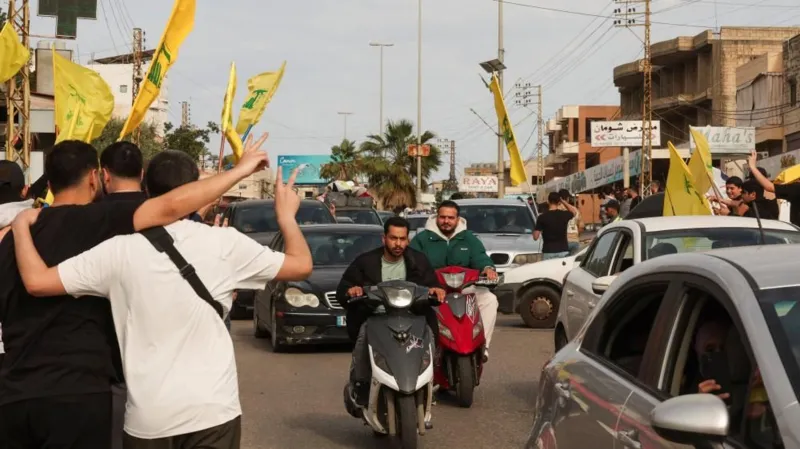
A ceasefire between Israel and Lebanon has brought temporary relief after weeks of intense conflict. People celebrated as the truce began at midnight, especially in the capital, Beirut.
Gunfire and fireworks filled the air as residents welcomed the pause in violence. Soon after, many displaced families began returning to their homes, especially in southern Lebanon, which is known as a stronghold of Hezbollah.
Displaced Families Begin Returning Home
Crowds gathered on highways leading south. Families carried mattresses and basic supplies as they traveled back. Many showed hope, but not everyone plans to stay.
In several areas, homes and infrastructure have been destroyed. Some villages near the border are still under Israeli control. For these families, returning home is not yet possible.
In Beirut’s southern suburbs, especially Dahieh, destruction is widespread. Airstrikes have reduced entire buildings to rubble. Meanwhile, families living in temporary tents along the coast remain unsure about going back due to safety concerns.
Humanitarian Crisis Still Looms
The conflict has caused significant loss of life and displacement. Over 2,100 people have died, according to Lebanese authorities. Around one million people have been forced to leave their homes.
This large-scale displacement has created a serious humanitarian crisis. Many families now face uncertain futures with limited access to shelter, food, and basic services.
Ceasefire Raises Key Questions
The ceasefire, announced by Donald Trump, is set for 10 days. However, it leaves several critical issues unresolved.
One major concern is the presence of Israeli troops in southern Lebanon. The agreement does not clearly mention their withdrawal. Israeli officials have expressed plans to maintain a security buffer zone. This could prevent many residents from returning.
Another issue is the future of Hezbollah’s weapons. The United States, Israel, and some Lebanese groups demand disarmament. However, Hezbollah strongly opposes this idea.
Hezbollah Refuses to Disarm
A senior Hezbollah official, Wafiq Safa, stated that the group will never give up its weapons. He emphasized the strong ties between Hezbollah and Iran, calling them inseparable.
This stance complicates efforts to reach long-term peace. Many believe that decisions about Hezbollah’s future will come from Tehran rather than Beirut.
Government Faces Limited Control
Lebanon’s government has little influence over Hezbollah. President Joseph Aoun has said that disarmament cannot be forced. He warned that using force could lead to internal conflict.
Instead, he supports dialogue and negotiations. However, experts believe progress will be slow due to regional tensions and political divisions.