A Childhood Marked by Violence
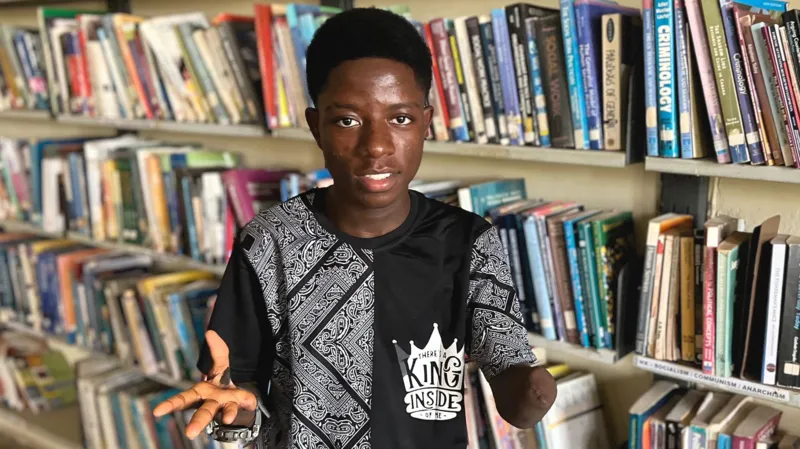
Ovey Friday, a 19-year-old student from Nasarawa State in Nigeria, faced a life-changing tragedy at a very young age. When he was just 13, his stepmother accused him of witchcraft. She took him to a traditional shrine, where he suffered severe abuse.
According to Friday, the herbalist tied his hands and legs, placed burning charcoal mixed with pepper on him, and covered him with a bedsheet. The pain was extreme. A concerned neighbor later informed the police, which led to his rescue.
Doctors rushed him to the hospital. Due to the severity of his injuries, they had to amputate his left hand. His right hand also suffered serious damage, leaving most of his fingers either amputated or permanently scarred.
Living With the Aftermath
The physical and emotional scars did not end there. After the incident, Friday struggled with public reactions. People often stared at him or made hurtful comments.
He remembers feeling deeply hurt and wishing others understood who he truly was before the incident. Despite this, he refused to give up on life.
Fighting for Education
Friday remained determined to continue his education. However, he faced another major hurdle when he applied for Nigeria’s university entrance exam.
The biometric system used for identification relied on fingerprints. Because of his injuries, the system could not capture his thumbprint or the prints of his damaged fingers.
With the support of his guardian and disability rights advocates, officials finally accepted his toe print as a valid form of identification. This decision allowed him to sit for the exam.
Today, Friday studies English and literary studies at a university in Nasarawa. He has become the first person in his family to attend university.
A Wider Problem for People With Disabilities
Friday’s experience is not unique. Many people with disabilities face similar barriers, especially with digital identity systems.
Scarlett Eduoku, a radio presenter based in Kano, also struggles with identity verification. She lost her left eye as a child, and many apps fail to recognize her face.
These challenges highlight a major gap in technology systems. Many platforms still do not account for people with physical differences.
A Message of Determination
Despite everything he has faced, Friday continues to move forward. He believes that not everyone has the support he received.
He points out that many people in similar situations give up because the system does not accommodate them. His story shows both the challenges and the strength required to overcome them.