
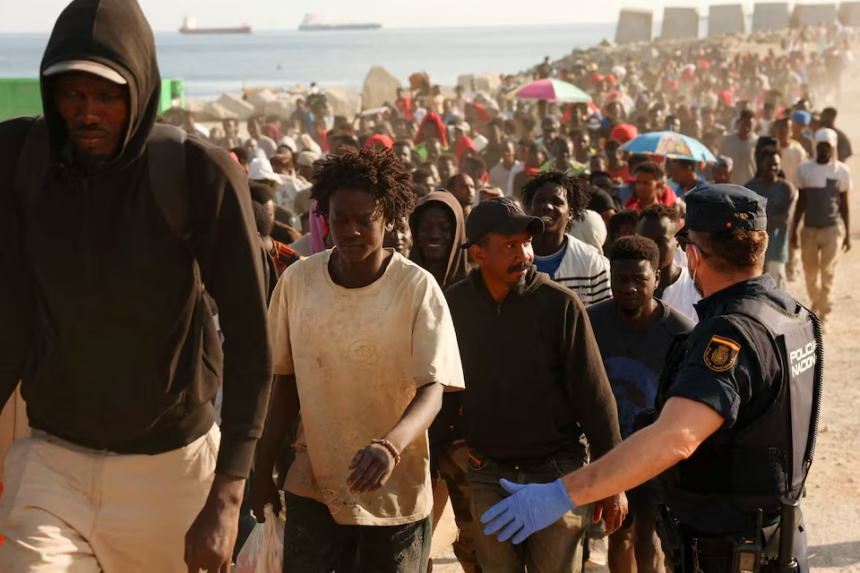
Spain has asked the European Union for extra help to process migrants still in Ceuta after a major border crossing from Morocco in July.
Interior Minister Fernando Grande Marlaska requested support from Frontex and other EU agencies. Spain wants to speed up the screening and processing of people who remain in the Spanish enclave.
Quick Facts
| Detail | Information |
|---|---|
| What happened | Spain asked the EU for help processing migrants in Ceuta. |
| Where | Ceuta, a Spanish territory in North Africa. |
| When | August 28, 2026 |
| Who is involved | Spain, Frontex, the European Commission, migrants and Morocco. |
| Current status | Around 5,000 migrants remain in Ceuta, according to Spain's Interior Ministry. |
| Why it matters | Spain needs help screening migrants and handling possible asylum and return cases. |
Spain Requests Frontex Support
Spain has asked Frontex to provide additional support in Ceuta. The request came from Interior Minister Fernando Grande Marlaska.
The Spanish government wants Frontex to help collect information from migrants who have not yet completed the screening process.
Spain also requested 10 additional Frontex officers. The officers would help authorities process migrants who entered Ceuta during the July crisis.
Spain also requested support from Europol and the European Union Agency for Asylum. The asylum agency could assist with interviews and interpreters.
Thousands of Migrants Remain in Ceuta
The latest Spanish government figure puts the number of migrants still in Ceuta at about 5,000. The figure includes around 1,500 minors, according to Interior Minister Marlaska.
More than 72,000 people entered Ceuta during the mass crossing on July 30 and 31. Most later returned to Morocco.
Earlier reports gave different estimates for the number of people still in the territory. Spain’s government has continued to update its figures as more people return or enter the screening process
Deadly Border Crossing
The July crossing created a major humanitarian and security crisis.
Spanish authorities reported 82 migrant deaths on the Spanish side. Morocco later confirmed 14 additional deaths.
Tensions Rise in Ceuta
The situation has also increased tensions between migrants and local residents.
Some migrants have stayed in temporary camps while authorities work through the backlog. Protests have taken place as residents demand action from the government.
The Spanish government is now trying to increase screening capacity and manage cases more quickly.
The Ceuta crisis has become an important migration issue for Spain and the wider European Union.
Processing thousands of people requires cooperation between Spanish authorities and European agencies. Authorities must identify migrants, assess individual cases and determine whether people qualify for protection or should return to their countries.
Spain’s request for more Frontex support shows the scale of the workload created by the July crossing.
What Happens Next in Ceuta
The EU asylum agency could also help with interviews and interpretation. After the screening and any asylum procedures, Spanish authorities will determine the next steps for individual migrants.
With thousands of people still awaiting processing, Frontex and other EU agencies could play an important role in helping Spanish authorities manage the cases.