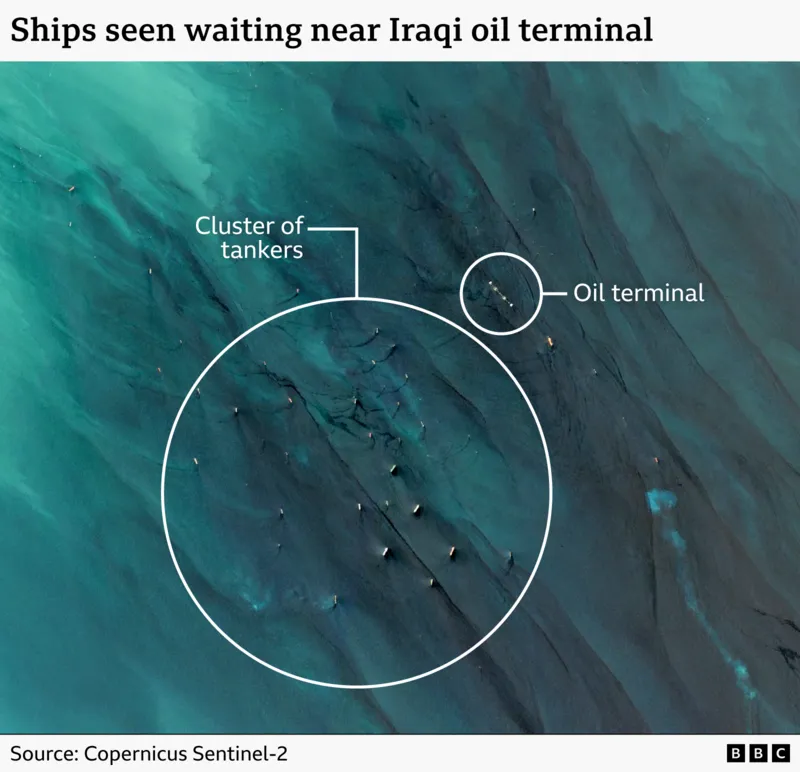
Despite claims that the Strait of Hormuz has reopened, shipping data shows only a handful of vessels have moved through it. Meanwhile, hundreds of ships remain stuck in the Gulf, waiting for safer conditions.
MarineTraffic tracking indicates more than 250 tankers and over 330 cargo vessels are currently in the region. Around 75 percent of tankers are not moving, with many anchored near oil terminals in Saudi Arabia, Iraq, and the UAE.
Experts say the slow return of traffic comes down to three main problems: security threats, risk of naval conflict, and new transit costs.
1. Security concerns remain high
Shipping companies are still worried about safety in the region. Since late February, tensions have escalated after US and Israeli strikes triggered a strong response from Iran.
Reports indicate that vessels attempting to pass without approval have been targeted. This has made captains and operators extremely cautious.
Naval activity has also increased. US forces introduced restrictions on Iranian-linked ports in April and have disabled several vessels labeled as non compliant. Even though recent political announcements suggest easing pressure, uncertainty remains.
2. Risk of mines and naval confrontation
The Strait of Hormuz remains one of the most sensitive maritime routes in the world. Experts warn that drifting mines and military escalation are still possible threats.
Satellite images show US warships positioned near key entry points into the Gulf of Oman. This military presence signals ongoing tension rather than full normalisation of shipping routes.
Because of this, many shipping companies prefer to wait rather than take the risk of transit delays or damage.
3. Extra tolls and operational costs
Another barrier is cost. Some operators report new unofficial charges or higher insurance premiums linked to the current situation.
These added expenses make voyages through the strait less attractive. For many companies, waiting offshore is currently cheaper than risking a passage through a disputed zone.
Shipping remains largely frozen
Data shows that traffic has not returned to normal levels. Analysts note that if conditions had truly stabilised, ships already trapped in the Gulf would begin leaving in large numbers.
Instead, most vessels remain stationary, suggesting that confidence in the route has not recovered.