
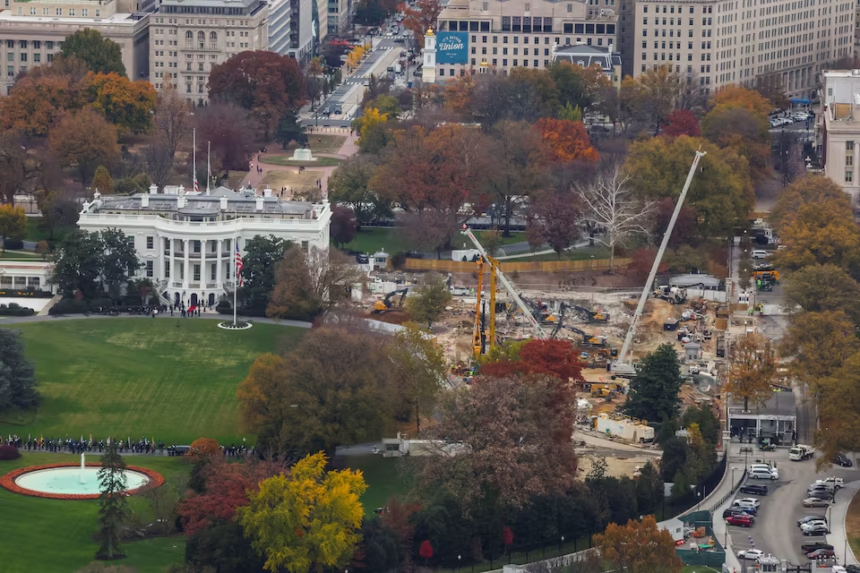
The U.S. Supreme Court has temporarily allowed Donald Trump’s administration to continue construction of his proposed White House ballroom.
The court’s action does not settle the legal dispute. It gives the administration more time to continue work while the justices review its request.
Quick Facts
| Detail | Information |
|---|---|
| What happened | The U.S. Supreme Court temporarily allowed Trump’s White House ballroom construction to continue. |
| Location | White House, Washington, D.C. |
| Date | August 21, 2026 |
| Project Cost | About $400 million |
| Ballroom Size | About 90,000 square feet |
| Key Issue | Whether the administration needs congressional approval for the project |
| Legal Challenger | National Trust for Historic Preservation |
| Current Status | Construction can continue temporarily while the Supreme Court reviews the case. |
Trump Ballroom Project Gets Supreme Court Stay
The U.S. Supreme Court has given Trump’s White House ballroom project temporary relief.
Chief Justice John Roberts issued an administrative stay on Friday. The order allows much of the construction to continue while the Supreme Court reviews the administration’s request.
The project has an estimated cost of $400 million. The planned ballroom will cover about 90,000 square feet.
The legal dispute began after the administration demolished the White House East Wing and started construction without seeking specific approval from Congress.
Trump Ballroom Faces Legal Challenge
The Justice Department says the wider East Wing project is about 65% complete.
The planned development includes a large ballroom and an underground complex.
Trump’s administration says the underground facilities will include security features such as bomb shelters and medical facilities. Officials also cite protection against drones and missiles.
The administration has argued that the project serves national security needs.
Justice Department lawyers also pointed to assassination attempts against the president and other security threats.
The National Trust for Historic Preservation opposes the project. The nonprofit argues that the administration needs congressional approval before making such major changes to the White House complex.
Supreme Court Gives Trump Ballroom Project Temporary Relief
The Supreme Court’s action is not a final ruling.
It temporarily prevents a lower court order from stopping much of the construction.
The D.C. Circuit Court of Appeals had previously upheld an order from U.S. District Judge Richard Leon. That order blocked above ground construction.
However, the lower court allowed underground work to continue. It also allowed work considered necessary for White House security.
The appeals court said national security arguments do not automatically allow the administration to ignore legal requirements.
White House East Wing Faces Historic Change
The White House East Wing has a long history.
The original East Wing was built in 1902 during Theodore Roosevelt’s presidency. Franklin Roosevelt’s administration later expanded it in 1942.
The building housed offices for the first lady and a White House movie theater.
The Trump administration demolished the East Wing as part of the ballroom project.
The National Trust for Historic Preservation later challenged the construction in court.
The group argues that the president does not have unilateral authority to make such a major change to the historic White House complex.
Supreme Court Backs Trump Ballroom Work
The Supreme Court will consider the administration’s request to continue construction while the lawsuit moves forward.
The latest order does not decide whether Trump’s administration has the legal authority to complete the project.
The final decision could determine whether construction continues without specific congressional approval.
Until then, much of the work can continue under the temporary Supreme Court order.
The Supreme Court has temporarily allowed Trump’s White House ballroom construction to continue.
The decision does not end the legal challenge. The justices still have to consider the administration’s request and the broader dispute over congressional approval.