The conflict between the United States and Iran continues to intensify after another American service member lost their life in northern Iraq. The US military confirmed the death happened during the safe disposal of unexploded explosives from a downed Iranian drone. Another service member suffered injuries during the operation.
The incident came only one day after a deadly attack on a US military base in Jordan. That strike killed two American soldiers, while another service member remains missing. During a search of the attack site, US Central Command (CENTCOM) also discovered unidentified human remains. Officials are still working to confirm the identity through forensic testing.
Military Tensions Continue to Rise
The latest developments mark the eighth straight day of military exchanges between the United States and Iran. Both countries have carried out multiple strikes as tensions continue to spread across the Middle East.
According to the US military, recent operations focused on reducing Iran’s ability to threaten commercial shipping through the Strait of Hormuz. American officials also said the attacks targeted members of Iran’s Islamic Revolutionary Guard Corps (IRGC), which Washington blames for the deadly strike in Jordan.
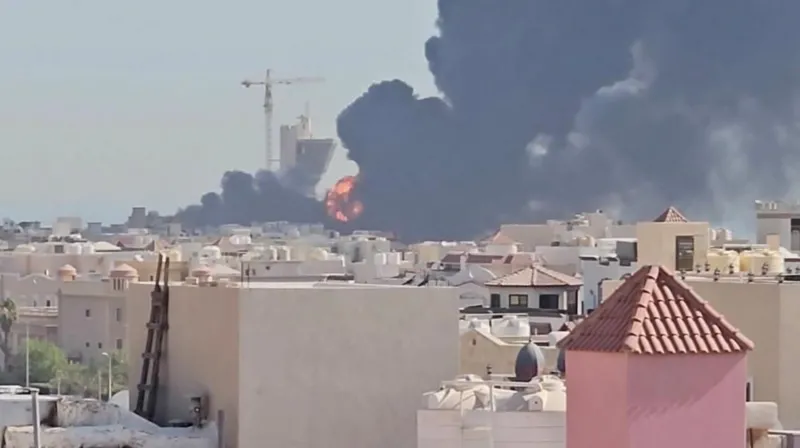
Verified video footage from the Jordanian military facility showed several explosions after the attack, highlighting the growing risks facing US forces stationed in the region.
Rising Death Toll and Civilian Impact
The number of American military personnel killed during the conflict has now reached 17. The total includes a US Navy pilot who was previously reported missing and has now been confirmed dead.
Iran has also reported significant losses. The country’s health ministry stated that at least 50 people have died and more than 500 others have been injured during US airstrikes carried out over the past three weeks.
More Attacks Reported Across the Region
Military operations continued overnight as Iranian media reported strikes near an under construction nuclear power plant in Darkhoveyn and on Qeshm Island. The International Atomic Energy Agency said the nuclear site was still under construction and did not contain nuclear material during its most recent inspection.
Jordan’s military intercepted three Iranian missiles, while another landed in a remote area without causing major damage. The interceptions followed warnings that the port city of Aqaba could become a potential target.
Jordan strongly protested the attacks and warned that any threat to its national security would not be tolerated.
Israel and Strait of Hormuz Remain Under Pressure
Israel also responded after missile activity near its borders. The Israeli military launched interceptor missiles to stop falling debris from entering its territory. Officials later confirmed that interceptor fragments landed near the southern city of Eilat, but no injuries or property damage were reported.
Meanwhile, Iran’s Revolutionary Guard claimed that two vessels ignored warnings while passing through the Strait of Hormuz. Iranian officials said the ships were involved in what they described as an accident. They also warned that vessels linked to the United States or using routes considered unsafe could face similar risks in the future.
Regional Security Concerns Grow
The continuing exchange of military strikes has increased fears of a wider regional conflict. With military operations expanding across Iraq, Jordan, Iran, and nearby waters, international concern continues to grow over the possibility of further escalation in one of the world’s most strategically important regions.