Crowds Welcome Pope in Conflict-Hit Bamenda
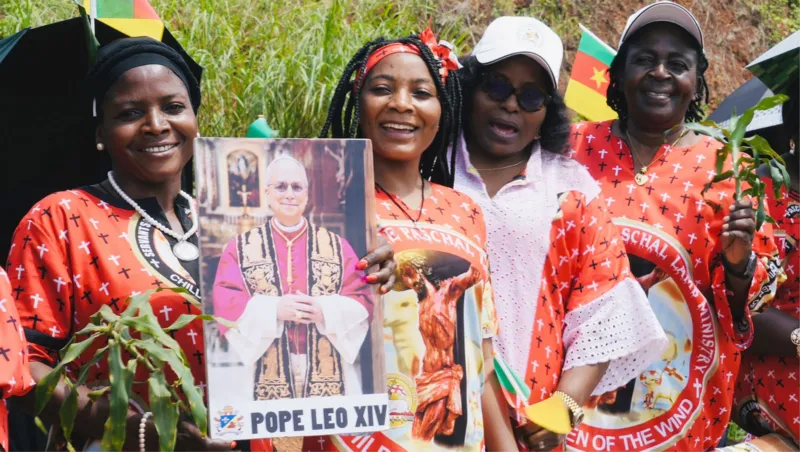
During Pope Leo XIV’s visit to troubled Anglophone Region, thousands of people gathered at Bamenda in Cameroon to greet him. A separatist conflict has caused violence in the city for years.
People sang, danced and waving flags despite security concerns as Pope Francis arrived in his heavily-protected vehicle. Separatist groups announced temporary safe passages ahead of the Pope’s visit. This allowed for a smooth event.
A Strong Message Against the Exploitation and Abuse of Africa
The Pope condemned the foreign powers who exploit Africa’s rich natural resources. He spoke to around 20,000 people at an airport mass.
He claimed that foreigners continue to exploit the resources of Africa for their own profit.
This behavior, he said, worsens the local conflicts and increases instability in the entire region.
The profits are used for funding conflicts and violence, causing a vicious cycle.
Call for Peace and Accountability
The Pope had attended an earlier peace meeting in Saint Joseph’s Cathedral. He spoke there about the crisis that is currently taking place in Cameroon’s English-speaking areas.
This conflict began in 2017. It has resulted in thousands of deaths and forced the displacement of many families.
Separatists groups are fighting against government forces and accusing them of marginalizing the English-speaking community.
Critique of global priorities
The Pope also criticised global leaders for spending large sums of money on wars rather than addressing humanitarian problems.
He said that global instabilities are still being driven by a few powerful individuals.
He called for world leaders to focus on peace and the welfare of humans instead of conflicts.
A visit focused on Africa’s growing church
The visit highlights Africa’s importance as the region with the highest growth rate for the Catholic church.
The Pope made it very clear that Africa is a crucial part of the future for the Catholic Church.
He emphasized faith, justice and political awareness in his message, which reflected the current challenges facing many African countries.