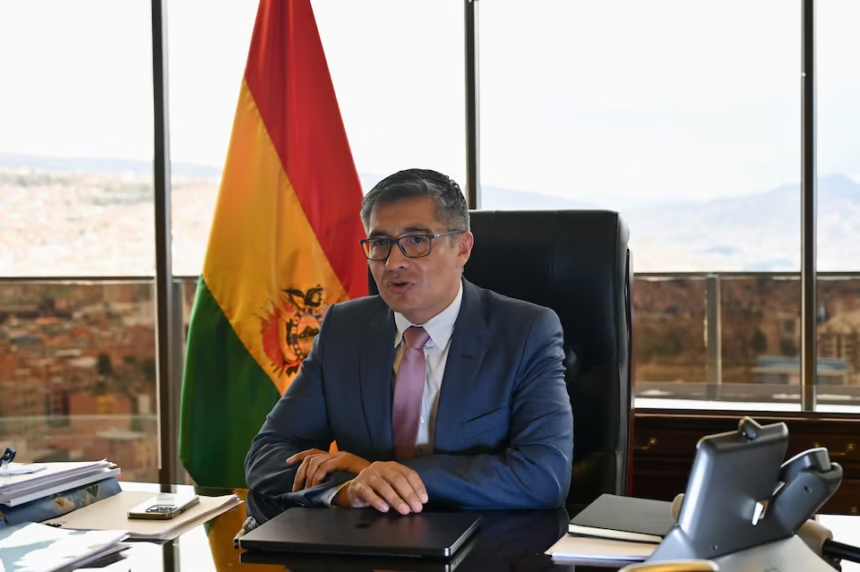
Bolivia’s Congress voted on August 18 to censure Economy Minister Jose Gabriel Espinoza, creating a new challenge for President Rodrigo Paz’s government as it pushes economic reforms.
The government says the vote did not meet the constitutional requirement for removing a minister and plans to challenge the decision before Bolivia’s Constitutional Tribunal. Espinoza also said he would seek a review of the decision.
Bolivia Economy Minister Faces Removal After Congress Vote
Bolivia’s Congress has voted to censure Economy Minister Jose Gabriel Espinoza after he failed to appear before lawmakers to answer questions about economic management, monetary policy and macroeconomic planning.
The vote has put President Rodrigo Paz’s government in a difficult position. Under Bolivia’s constitution, the president has 24 hours to remove a minister who has been censured.
The government, though, argues that the congressional vote did not meet the constitutional requirements for censure. Presidential spokesperson Jose Luis Galvez said the administration would challenge the decision before the country’s Constitutional Tribunal.
Quick Facts
| What happened | Bolivia's Congress censured Economy Minister Jose Gabriel Espinoza. |
|---|---|
| Where | La Paz, Bolivia |
| When | August 18, 2026 |
| Who is involved | Economy Minister Jose Gabriel Espinoza, President Rodrigo Paz and Bolivia's Congress |
| Vote | 91 lawmakers voted to censure Espinoza. |
| Government position | The government says the vote did not meet the constitutional requirement. |
| Current status | Espinoza plans to seek a review by Bolivia's Constitutional Tribunal. |
Congress censured Bolivia’s Economy Minister Jose Gabriel Espinoza after he failed to attend a hearing on economic management and monetary policy.
Espinoza said he was in Santa Cruz dealing with diesel supply problems before travelling to Brazil. He plans to challenge the decision before the Constitutional Tribunal.
Presidential spokesperson Jose Luis Galvez said 111 votes were required for censure under the constitution, but only 91 lawmakers supported the motion, leading the government to question its legality.
Why Is This Important?
The dispute comes at a sensitive time for President Paz’s administration.
The government is seeking congressional support for economic reforms and for a financing program negotiated with the International Monetary Fund in July.
The financing program is viewed as important to efforts to stabilize Bolivia’s economy and address continuing shortages of fuel and foreign currency.
His possible removal could make it more difficult for the government to maintain momentum on its economic program while it seeks support from lawmakers.
Background
Espinoza joined President Paz’s government when the administration took office in November. He became a key figure in economic policy and negotiations with multilateral lenders.
His relationship with lawmakers has also faced growing pressure.
In recent weeks, Espinoza came under criticism over the reported purchase of an Audi vehicle at a declared price that was significantly below its market value. Espinoza said the difference resulted from a paperwork error.
The latest dispute is centered on his absence from Congress and the constitutional process surrounding his censure.
What Happens Next?
The immediate issue is whether Espinoza will be removed from office or remain in his position while the legal dispute is reviewed.
Espinoza is expected to seek action from Bolivia’s Constitutional Tribunal. The government argues that the tribunal should examine whether Congress followed the constitutional requirements before the minister is removed.
The outcome could affect President Paz’s efforts to advance economic reforms and secure support for the financing program negotiated with the International Monetary Fund.
The dispute comes as Paz’s administration seeks congressional support for economic reforms and an IMF linked financing program aimed at addressing major economic pressures.