The United States and Iran exchanged military attacks for the first time in more than a month, raising fears of a new escalation in the Middle East.
Iran said it fired missiles toward US military targets in Jordan and the United Arab Emirates after American forces struck Iranian rocket launchers on Larak Island.
The renewed confrontation also affected global markets. Oil prices rose nearly 3%, while US stock indexes moved lower as investors reacted to growing tensions.
Quick Fact
| Detail | Information |
|---|---|
| What happened | The US and Iran exchanged military attacks after weeks of relative calm. |
| Where | Larak Island, Jordan, the UAE and the Strait of Hormuz region. |
| When | Overnight into Monday. |
| Who is involved | The United States, Iran, CENTCOM, the IRGC, Jordan and the UAE. |
| Current status | Military tensions have increased, while diplomatic talks remain stalled. |
| Why it matters | The conflict threatens global shipping and energy supplies through the Strait of Hormuz. |
US and Iran Military Escalation Raises Conflict Fears
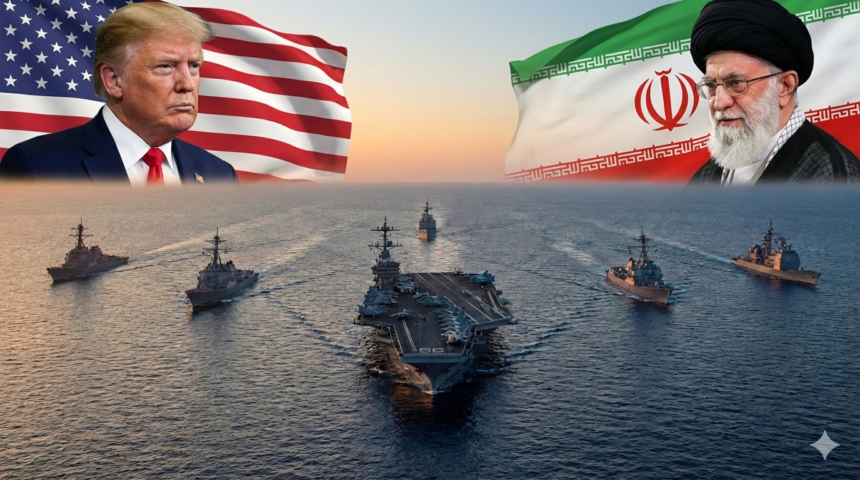
The latest US and Iran military escalation began after American forces targeted Iranian rocket launchers on Larak Island.
US Central Command said it observed Iranian forces preparing to launch rockets and deploy sea mines into the Strait of Hormuz.
CENTCOM described the operation as limited and precise. The military said its forces acted to protect commercial shipping and civilian vessels.
Iran responded with missile launches toward areas hosting US military personnel in Jordan and the United Arab Emirates.
The exchange marked the first major military confrontation between the two countries in more than a month.
Iran Responds After US Strike on Larak
US Central Command said American forces struck two Iranian rocket launchers on Larak Island.
The US military claimed Iranian forces posed an immediate threat to shipping in the Strait of Hormuz.
Iranian officials strongly condemned the attack and promised a response.
Iranian state television released footage that reportedly showed missiles launched toward US military installations in Jordan.
Jordan’s armed forces said its air defense systems intercepted and destroyed eight missiles that entered the country’s airspace.
The military said the missiles did not cause any threat to civilians or property.
Iranian media also claimed that the Islamic Revolutionary Guard Corps targeted a military base hosting US personnel in the United Arab Emirates.
The UAE described the incident as a dangerous escalation and said it reserved the right to respond.
Iranian President Masoud Pezeshkian said Iran did not seek a wider war but would respond to aggression.
The IRGC also called the US strike a serious strategic mistake.
The US and Iran military escalation could have serious consequences for the global economy.
Oil prices rose almost 3% after news of the attacks. US stock markets also moved lower.
The biggest concern remains the Strait of Hormuz.
Any major disruption to shipping could affect global oil supplies and increase energy prices.
The conflict could also increase pressure on countries across the Middle East.
Jordan and the UAE have already become involved because Iranian missiles and drones entered or approached their territory.
Regional governments now face growing concerns about another wider military conflict.
US Iran Tensions Face Uncertain Next Steps
The immediate future depends on whether the United States or Iran launches further military action.
Both countries have issued strong warnings, but neither side has announced a major new operation.
Diplomatic talks between Washington and Tehran remain stalled.
However, Iran and Oman continue discussions about restoring safe maritime traffic through the Strait of Hormuz.
Regional countries, including Qatar, have also supported diplomatic efforts.
Meanwhile, the Trump administration plans to increase economic pressure on Iran through additional sanctions.
The coming days could determine whether tensions move toward diplomacy or another period of military confrontation.