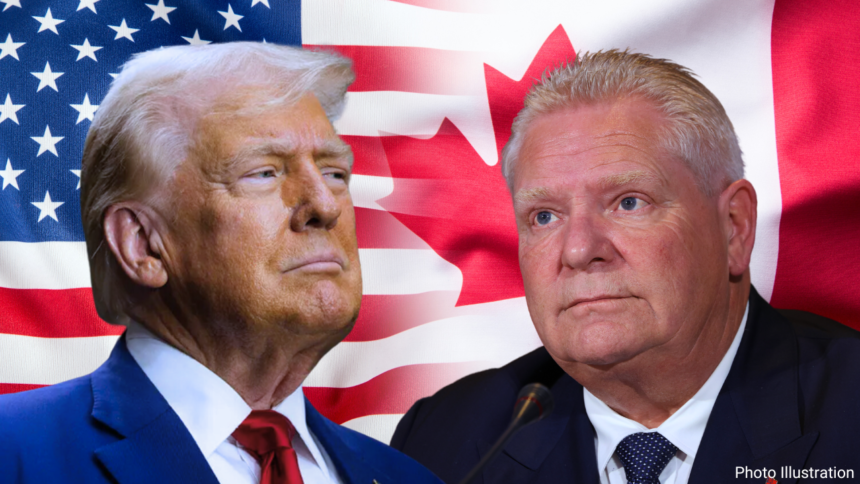
President Donald Trump’s escalating trade dispute with Canada is becoming a growing political concern ahead of the US midterm elections in November. Republican candidates in several states now face pressure over tariffs that could raise costs for consumers and businesses.
The issue matters most in states with strong economic ties to Canada. Maine, Michigan, Ohio, Iowa and Alaska all have industries that depend heavily on cross border trade.
Quick Fact
| Detail | Information |
|---|---|
| What happened | Trump increased tariffs on several Canadian goods. |
| Countries involved | United States and Canada |
| Political impact | The tariffs are becoming an issue ahead of the US midterm elections. |
| Key states | Maine, Michigan, Ohio, Iowa and Alaska |
| Canada's response | Canada plans retaliatory tariffs on selected US goods. |
| Public opinion | The supplied poll found only 20% support for higher tariffs on Canada. |
| Why it matters | The dispute could affect prices, businesses, exports and election campaigns. |
Trump Canada Tariffs Create Political Pressure
Trump’s tariff policy has created a difficult situation for some Republican candidates. Susan Collins, a Republican senator from Maine, has warned that the measures could hurt her state.
Maine relies heavily on trade with Canada. Seafood, lumber, and other industries have close links with Canadian businesses.
Collins has described the tariffs as harmful to Maine. She also said the trade dispute could make her reelection campaign more difficult.
Political scientist Matthew Lebo said the Senate could become more competitive if voters connect the tariffs with higher prices and weaker exports.
Canada and US Trade Tensions Grow
Relations between Washington and Ottawa have changed sharply since Trump returned to the White House.
The latest dispute intensified after trade negotiations failed to produce an agreement. Trump then introduced tariffs of up to 50 percent on several Canadian products.
The measures cover a wide range of goods. These include items such as hockey sticks, cement and honey.
Trump has also increased his criticism of Canada. His administration has blamed Ottawa for the breakdown in negotiations.
Americans Show Limited Support for Tariffs
Public opinion could become an important factor in the election.
An Ipsos and Reuters poll reported that about two thirds of Americans opposed the proposed change to the name of Lake Ontario. Only about 20 percent supported higher tariffs on Canadian goods.
The figures suggest that many Americans remain skeptical of the administration’s approach to Canada.
Republicans in border states have reportedly raised concerns about the political impact. Some have urged US Trade Representative Jamieson Greer to find a way to reduce tensions.
Democrats Target Trump’s Trade Policy
Democratic candidates have already started using the dispute as an election issue.
Michigan Senate candidate Abdul El Sayed argued that the tariffs hurt Michigan consumers and businesses. He said residents could face higher prices because of the trade measures.
Some Republican candidates have taken a different approach. Others have tried to avoid discussing the federal trade dispute during their campaigns.
Why Canada Trade Matters in the Midterms
The political impact could extend beyond Canada and the United States border.
The US economy already faces concerns about affordability, energy prices, employment and investment. Additional trade costs could add to those pressures.
Republicans must therefore explain how the tariff policy benefits voters. Democrats, meanwhile, can argue that the trade dispute is making everyday goods more expensive.
Political analysts say the issue could also bring together different parts of the Democratic Party. Centrist and progressive voters may share concerns about the economic effects of the tariffs.
What’s Next for Trump’s Canada Tariffs?
The next major development will come as Canada moves ahead with retaliatory tariffs.
For Republican candidates in closely contested states, the bigger question will be whether voters treat the tariffs as a temporary trade dispute or as part of a wider affordability problem.
Trump’s trade fight with Canada has moved beyond foreign policy and into US election politics. Republican candidates in trade dependent states now face growing questions about tariffs, prices and relations with Canada.