
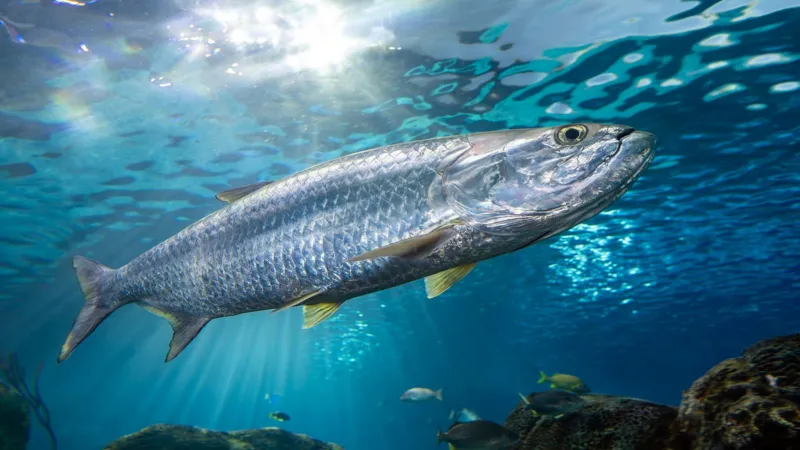
1. Migration of fish populations is declining sharply
The number of freshwater migrating fish is declining rapidly around the globe. An extensive scientific study covering over 15000 species found that the average loss of 81 percent per year has occurred in the last fifty years. Many of these fish depend upon long rivers, lakes and coast routes to reach breeding grounds, but they can’t complete the journey.
These species include the Atlantic tarpon and golden mahseer. They are unable to move freely and their habitats have shrunk.
2. The main causes of decline
Three major issues are linked to the decline, according to scientists
The dams or river barriers prevent fish from reaching the spawning areas. Water quality is affected by pollution, which also affects the survival rate. The overfishing of adult populations reduces their ability to reproduce.
3. Habitat destruction and migration stress
When they encounter obstacles, fish that migrate long distances consume more energy. They arrive more tired, which makes them vulnerable to diseases and predators.Since the Industrial Revolution, species such as the river lamprey have declined in abundance.
4. Freshwater fishes are of global importance
Freshwater fish is important not just for the ecosystem but for humans as well, say experts. They are a source of food for around 200 million people.
There are many species that migrate thousands of miles, and they show a wide range in their size and behaviour. These fish, which range from large river predators and long-distance traveling eels to local livelihoods as well as biodiversity support.
5. United Nations announces new conservation measures
There are also culturally significant fish, such as the mahseer (golden), which is known as the “tiger” of the Himalayas. Many communities hold it in high regard for its spiritual and cultural significance.
Plan is to add these species as part of a global agreement that protects migratory wildlife. The countries would have to coordinate their conservation efforts.
6. Learn from the successful recovery efforts
Recovery is possible for other migratory animals. Saiga antelopes were once on the verge of extinction after an epidemic. Its population is now over 1 million after coordinated international efforts to protect it.
If governments work together, experts say that similar collaboration could aid in the recovery of freshwater fish.