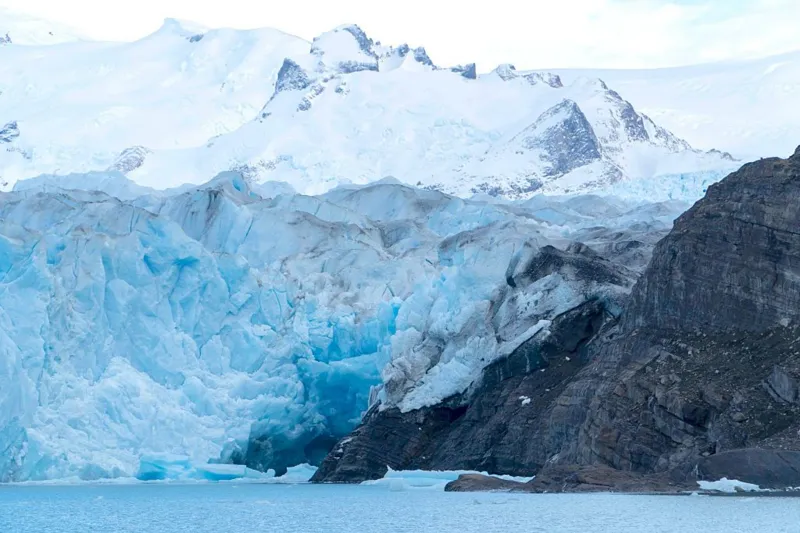
A vineyard owner in Mendoza explains the simple truth that water is essential. The farm of her family is located at the base of the Andes Mountains, where snow melts and feeds the rivers which sustain daily life and agriculture.
Virginia de Valle is the manager of a vineyard that covers 16 hectares in Argentina’s wine capital. According to her, the Andes mountains are the primary source of water in the area for both crops and houses. Winter snowfall provides the majority of water. Glacier melt is even more crucial in dry years to maintain water flow.
She claims that the survival of this area is dependent on it. Mendoza is often referred to as the “daughter of water” by locals because it relies on meltwater from mountains.
Concerns over the protection of glaciers
Argentina is home to more than 16000 glaciers, which are spread out across many provinces. The ice deposits in Argentina provide water for millions of people, and many rivers are supported by these ice reservoirs.
A national law adopted in 2010 has protected glaciers for many years. This law defined glaciers as important freshwater reserves. The law also prohibited any activity commercial that might damage the glaciers. It also protected the nearby permafrost areas.
The Institute of Snow Research, Glaciology and Environmental Sciences in Argentina has compiled a list of glaciers.
What is new in the Law
The legislature has now passed reforms to shift the decision-making process from federal governments to provinces. Local authorities will determine which glaciers are strategically significant.
The decisions made will depend on many factors, including the availability of drinking water, agricultural needs, biodiversity, research and tourism.
Some critics fear that this new change will weaken the protections of certain regions. Some supporters argue that it gives local authorities more flexibility.
Mendoza: Why the matter is important
Mendoza is already experiencing frequent dry conditions. Recent years have seen a decrease in the reliability of rain and snowfall.
The melting of the glaciers is crucial during periods of drought. This helps to stabilize the river flow during times of drought when other water sources are shrinking. Residents and farmers worry about the long-term water stress that could result from reduced protection.
De Valle is a vineyard owner who has a personal stake in the matter. Each drop of water from the Andes is important for livelihoods, crops and everyday life.