A satirical idea born from controversy
India’s political conversation has taken an unusual turn with a viral online movement built around the cockroach. The idea emerged after a controversial remark during a court hearing, where unemployed young people involved in journalism and activism were compared to cockroaches and parasites. The comment sparked anger and humour across social platforms.
The speaker later clarified that the statement referred only to individuals with fake academic degrees, not young people in general. However, the public reaction had already spread widely.
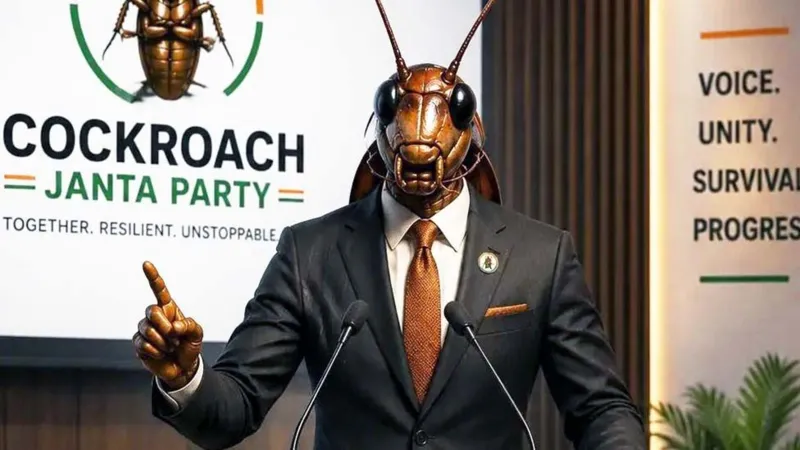
The rise of the Cockroach Janta Party
A satirical group soon formed around the idea and named itself the Cockroach Janta Party. The name plays on the ruling party’s title and uses humour to challenge political narratives.
The group does not operate as a formal political party. Instead, it works as a digital movement driven by satire and online participation. Its creators describe it as a space for people who feel ignored in traditional politics.
The movement gained rapid attention after its launch. It attracted large numbers of sign ups through an online form and quickly became a trending topic across social platforms.
Social media growth and public response
The movement grew at an unexpected pace. Its Instagram presence reached millions of followers within a short time and even surpassed several established political accounts in follower count.
A large part of its growth came from memes, videos, and artificial intelligence generated visuals. A viral hashtag encouraging users to identify with the idea also helped spread the message.
Some opposition figures publicly acknowledged or referenced the movement. This added further visibility and pushed it into mainstream discussion.
At the same time, the movement’s account on another platform became unavailable in India after being restricted under a legal request.
Offline reactions and youth participation
The movement did not remain limited to the internet. Some supporters appeared at public events dressed as cockroaches as a form of protest and expression. Clean up drives and small gatherings also used the symbol to highlight frustration and humor.
Supporters say the movement reflects dissatisfaction with current political communication. Many young participants feel excluded from formal political processes and say their concerns are not heard.
India has a very young population, with a large share under the age of thirty. However, political participation among youth remains relatively low. Surveys suggest that many young people avoid political engagement, while only a small percentage are active members of political parties.
Wider political meaning and debate
Analysts see the movement as a sign of digital age political expression. It highlights how satire, memes, and online identity can shape public conversation.
Some observers believe it represents genuine frustration among young citizens. Others argue it is more of an online performance than a real political shift.
Despite the debate, established political parties remain dominant on the ground. The online movement has not yet translated into formal political change.
Youth frustration and global context
The rise of such movements reflects broader youth dissatisfaction across South Asia. Recent years have seen youth led protests in several countries driven by concerns over jobs, inflation, and future opportunities.
The cockroach themed movement has now become part of that wider conversation about representation, voice, and political engagement in the digital era.