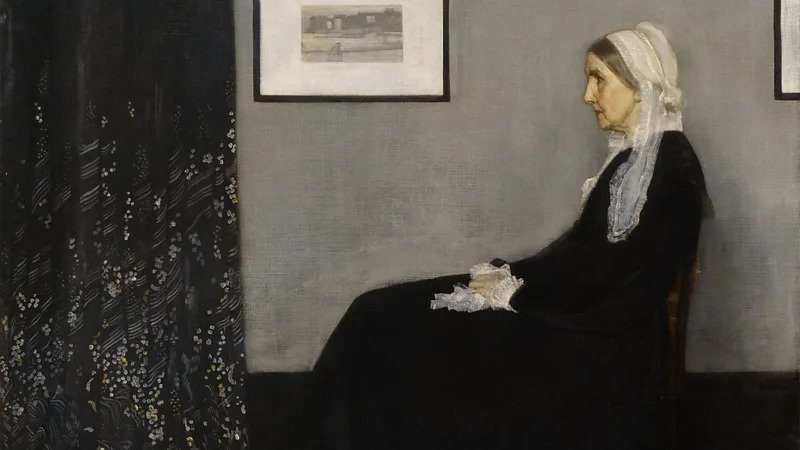
A painting that was never meant to be famous
“Whistler’s Mother” is one of the most recognized artworks in the world today. The painting’s real title is Arrangement in Grey and Black: Portrait of the Painter’s Mother (1871). It is now being shown at Tate Britain as part of a major exhibition on James Abbott McNeill Whistler.
The portrait shows Whistler’s mother seated in a simple, calm pose. At the time it was created, no one expected it to become a cultural icon.
An unexpected beginning
The painting came together by chance. In late 1871, Whistler’s usual model could not attend a sitting due to illness. His mother, Anna McNeill Whistler, stepped in reluctantly.
She later reflected on the moment and saw it as meaningful, writing that disappointments can sometimes lead to good outcomes.
Near destruction and early rejection
The painting almost did not survive its early years.Later, it also faced rejection risks from the Royal Academy exhibition in 1872. It only made it into the show after support from Whistler’s friend Sir William Boxall.
Critics and viewers did not respond with enthusiasm. The work had a difficult start in the art world.
Why critics did not understand it
At the time, Victorian audiences preferred clear stories in art. They liked paintings based on history, mythology, or literature.
Whistler worked differently. He used simple titles like “harmony,” “nocturne,” and “symphony.” These did not explain the subject clearly, which confused many viewers.
Because of this, his work often faced criticism. People expected storytelling, but Whistler focused more on mood, form, and arrangement.
From rejection to global fame
Despite early criticism, Whistler’s Mother slowly gained recognition. Over time, it became one of the most reproduced artworks in modern culture.
It has appeared in cartoons like Donald Duck, TV shows such as The Simpsons, and even in literary references like Nabokov’s Lolita. Its image moved far beyond the art world and entered popular culture.
What once seemed like a simple portrait became a symbol of calm, discipline, and tradition.
Why Whistler might not have liked its success
Whistler often resisted how the public interpreted his work. He focused on artistic balance and composition rather than meaning or storytelling.
The massive fame of this single painting likely frustrated him. It overshadowed much of his wider body of work, which he considered more important.