
Early life and rise to recognition
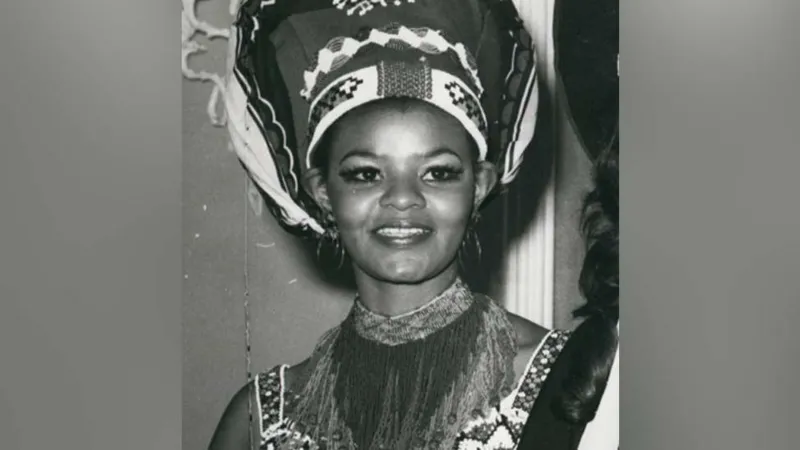
Cynthia Philisiwe Shange was born on twenty seven July nineteen forty nine. She grew up during apartheid in South Africa, a system that restricted opportunities for Black citizens. Despite these barriers, she built a path into public life through beauty pageants and later acting.
Breaking barriers in beauty pageants
Shange gained national attention after winning Miss Africa South, a contest created because Black women were not allowed to enter Miss South Africa at the time. This achievement opened the door for her to compete internationally.
In nineteen seventy two, she represented South Africa at the Miss World competition in London. She stood on the global stage during a period when apartheid shaped every aspect of her country’s identity. She finished in fifth place, making history as the first Black woman to represent South Africa at Miss World.
Earlier challenges in the pageant system
Before Shange’s participation, Pearl Gladys Jansen also competed internationally as Miss Africa South in nineteen seventy. Her entry caused controversy and highlighted the racial inequalities within global pageants during that era.
Acting career and public life
After her pageant success, Shange built a long acting career. She appeared in several productions over the years and became known for her strong screen presence. Her work helped expand her influence beyond pageantry into South African entertainment.
Death and family tribute
Shange passed away in hospital early Monday morning after an illness. She was seventy six years old.
Her daughter, Nonhle Thema, confirmed the news and paid tribute to her mother. She described her as a compassionate and graceful woman who brought warmth and kindness to those around her. She also asked for privacy and prayers for the family during this difficult time.
Funeral details have not yet been shared.
Legacy
Cynthia Shange is remembered as a trailblazer who challenged racial barriers during apartheid. Her journey through international pageantry and acting left a lasting mark on South African cultural history.