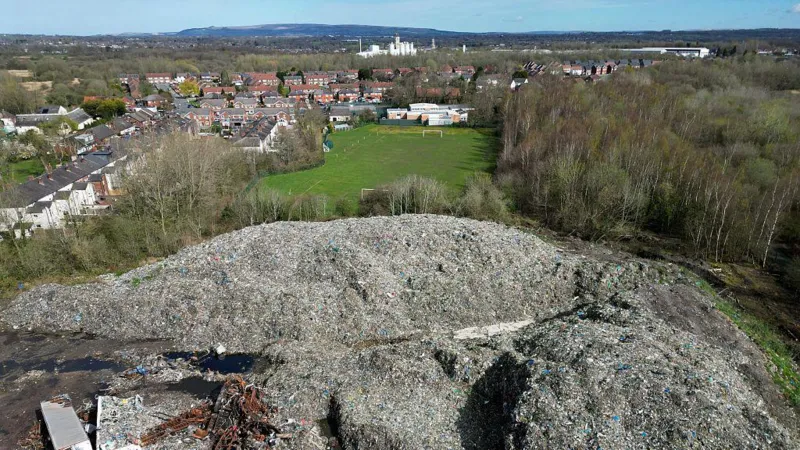
Major Waste Crime Sites Identified
Authorities have published a new national watchlist highlighting illegal waste activity across England. The list includes 117 high priority sites linked to serious environmental concerns.
Among them, 28 locations stand out as illegal waste super sites. Each of these contains more than 20,000 tonnes of dumped material.
Officials estimate that around 700 illegal waste sites exist in total, but only the most urgent cases appear in the new list. The aim is to improve transparency and show where action is already underway.
Largest Site Reaches 281,000 Tonnes
The biggest site recorded is in Northwich, Cheshire. It holds about 281,000 tonnes of contaminated soil. This makes it the largest illegal waste site currently tracked.
Investigations earlier this year had already identified similar large scale dumping issues in the same area.
Other High Volume Locations Across England
Several other major sites appear on the watchlist.
These include locations in Wigan and Sheffield, which together hold close to 40,000 tonnes of waste.
Additional large sites are spread across the country. Examples include Burnley, Retford, Scunthorpe, and St Austell, each holding between 50,000 and 99,000 tonnes.
Other significant locations include areas in Suffolk, Essex, West Sussex, Cambridgeshire, and Worcestershire. One site in Pershore contains up to 199,000 tonnes of waste.
Clean Up Work Already Underway
Cleanup operations are already taking place at selected locations such as Hoads Wood in Kent and Kidlington in Oxfordshire.
These sites were chosen because they pose serious environmental risks and affect nearby communities.
Authorities confirm that cleanup decisions depend on strict risk based criteria set by the government.
Funding Limits Slow Wider Action
While some sites receive government funded cleanup support, many others remain without immediate action.
Officials explain that limited funding restricts large scale removal work. As a result, only the most dangerous or high impact sites are prioritized.
The Environment Agency continues to monitor all listed locations and respond where risks escalate.