Hundreds Go Missing After Leaving Myanmar
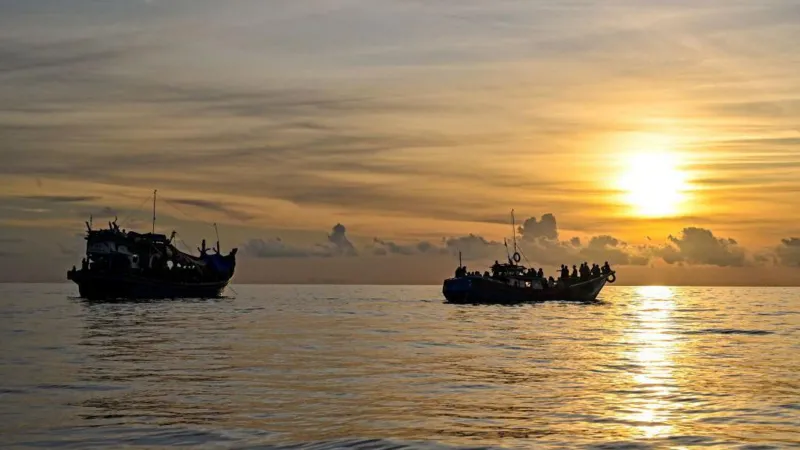
More than 500 Rohingya asylum seekers are feared dead after two overcrowded boats disappeared during a dangerous sea journey from Myanmar. The boats left Rakhine State on 29 June, carrying an estimated 530 people. Since then, no one has received any confirmed information about their fate.
Many experts believe the boats likely sank after entering rough waters caused by the monsoon season. The vessels were reportedly old fishing boats that smugglers had modified to carry large numbers of passengers. These boats often have weak engines and poor safety conditions, making long sea journeys extremely risky.
Women and children may have made up nearly half of the passengers. If confirmed, this could become one of the deadliest tragedies involving Rohingya refugees in recent months.
Conflict Makes Information Hard to Confirm
The ongoing conflict in Myanmar’s Rakhine State has made it difficult to gather reliable information. Fighting between the Arakan Army and Myanmar’s military has disrupted communications across the region.
Most phone and internet services remain unavailable. As a result, aid workers and human rights groups cannot easily contact people in the area to verify what happened.
Researchers monitoring the situation believe both boats departed from Sin Tet Maw on the same day. One boat reportedly left in the morning, while the second departed later that afternoon.
Families Still Waiting for News
The boats were expected to travel along Myanmar’s southern coastline before passengers continued overland through Thailand toward the Malaysian border. This route has become a common path for Rohingya fleeing violence and poverty.
Families usually receive news from their loved ones within a week after departure. Nearly three weeks have now passed without any contact, increasing fears that both boats were lost at sea.
Authorities in Bangladesh recovered the body of one woman along the coastline. Fishermen also reported finding several bodies in waters between the Irrawaddy Delta and Mon State several days later.
These discoveries support concerns that the boats may have capsized during the journey.
Rohingya Continue to Risk Dangerous Journeys
More than one million Rohingya refugees currently live in crowded camps in southern Bangladesh. Many families struggle with limited food supplies, shrinking humanitarian aid, and very few employment opportunities.
Crime networks continue to operate inside and around the camps, while strict movement restrictions leave many refugees with little hope for a better future.
Because of these harsh conditions, many Rohingya continue to risk dangerous sea crossings despite knowing the serious dangers involved. Smuggling networks often promise safe travel, but many journeys end in tragedy.
The disappearance of these two boats highlights the ongoing humanitarian crisis facing the Rohingya community. Until officials recover more evidence or survivors come forward, the fate of more than 500 people will remain unknown.