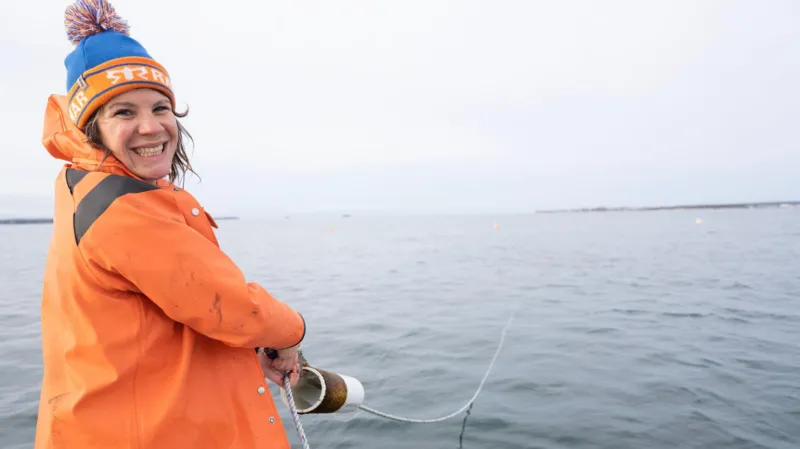
From Manhattan Career to Coastal
Suzie Flores once worked in Manhattan in academic publishing. She had a stable office job and a daily commute from Jersey City. Over time, her priorities shifted. She began to question the life she was building and what she truly wanted for her future.
She is now a kelp farmer based on the coast of Connecticut. Her journey shows a clear shift from city work to sustainable food production at sea.
Starting a New Life in Connecticut
Flores and her husband Jay decided to leave city life behind. They moved north and bought an old marina near the Connecticut and Rhode Island border. The location is part of one of the last active commercial fishing areas in the state.
Jay, a former combat photographer, later retrained as an engineer. At the same time, Flores became a mother to three children in a short span. These changes pushed her to rethink her long term goals.
She asked herself a simple question: what legacy would she leave behind?
Discovering Kelp Farming
Flores returned to education and studied environmental science. During this time, she connected with marine experts, including University of Connecticut biologist Charlie Yarish, known for his work in seaweed farming in the US.
He responded quickly and guided her toward GreenWave, a nonprofit that helps new seaweed farmers understand permits and ocean farming systems.
With support and training, she began planning her own kelp farm.
Life on the Water
Today, Flores runs Stonington Kelp Company from her marina home. Her work depends on weather and sea conditions. On calm winter mornings, she goes out on the Atlantic to inspect sugar kelp lines.
The crop grows underwater on long ropes anchored offshore. In February, the kelp is still young and small. By spring, it grows into long blades that can reach several meters.
She measures growth, takes photos, and collects water samples for researchers. Then she returns to shore to continue farm operations.
Building a New Food Market
Despite progress in farming, Flores faces a major challenge. The US market for seaweed is still small. Many consumers are unfamiliar with kelp as food.
She has spent years trying to change that. Her goal is to make seaweed a regular part of American diets as a sustainable food source.
While interest in climate friendly food is rising, demand has not yet matched production.