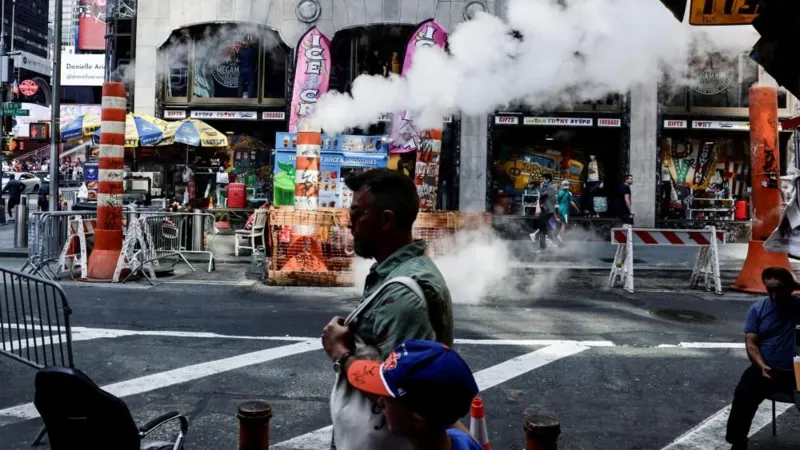
Large parts of the United States and Canada are facing another dangerous heatwave, with millions of people experiencing extreme temperatures, high humidity, and poor air quality.
Cities across the northern and eastern regions of North America are preparing for several days of intense heat. Areas including Toronto, Boston, New York City, Philadelphia, and Buffalo are under heat advisories as temperatures continue to rise.
Extreme Temperatures Hit Major Cities
A powerful high pressure system is pushing a large area of hot air across the US and Canada. This weather pattern has created a heat dome, trapping hot and humid conditions over many regions.
Several areas have already recorded unusually high temperatures. Parts of Montana and Utah experienced record breaking heat, while the hot weather is now moving toward the Midwest and Northeast.
Chicago could see temperatures reach around 97F (36C), while New York City may approach 100F. Washington DC could experience temperatures of about 102F. High humidity will make conditions feel even hotter and increase health risks.
Millions Face Heat Warnings and Health Risks
Millions of people across major US cities are being advised to take precautions during the heatwave. Officials are encouraging residents to stay hydrated, avoid long periods outdoors, and check on vulnerable people.
The latest heatwave comes shortly after another record breaking heat event during the Fourth of July holiday. That extreme heat affected more than 165 million people across the US East Coast and Midwest.
The earlier heatwave caused major disruptions, including the cancellation of some holiday events. Health officials also reported dozens of heat related deaths during the early July hot spell.
Cooler Weather Expected After Storms
Parts of central and eastern Canada have also faced very high temperatures. However, a cold front is expected to bring cooler weather in the coming days.
The changing weather pattern may also bring severe thunderstorms across parts of Canada, New England, and the eastern US. These storms could help reduce the most intense heat, but many areas will still remain warmer than normal.
Climate Change Increasing Heatwave Risks
Scientists say heatwaves are becoming more frequent, stronger, and longer because of human driven climate change.
Global temperatures have already increased by around 1.1C since the industrial era began. Experts warn that extreme heat events will continue unless countries take stronger action to reduce greenhouse gas emissions.
The latest US and Canada heatwave highlights the growing impact of rising temperatures and the need for communities to prepare for more frequent extreme weather events.