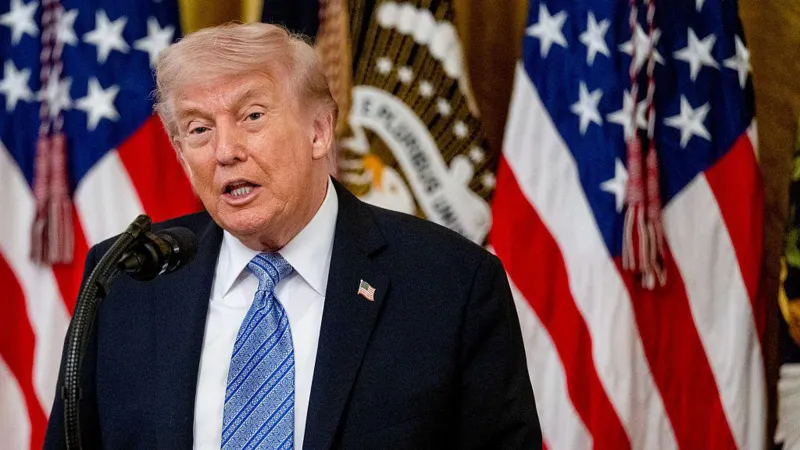
Donald Trump has suggested progress in talks with Iran over a possible peace agreement, while also warning that military action could return if negotiations fail. His comments created optimism in global markets but were quickly followed by caution about whether a final deal can actually be reached.
Shift in US Position on Iran Talks
Trump recently paused an initiative aimed at securing maritime security in the Strait of Hormuz. He said this step was taken to allow space for negotiations toward a possible agreement with Iran.
He described the situation as close to a breakthrough and said both sides were working toward a written framework to end hostilities in the Gulf region. However, he also admitted that a final agreement is not guaranteed and depends on continued progress in talks.
Mixed Signals From Washington
While early reports suggested that US and Iranian representatives were approaching a structured understanding that could end the conflict, the message from Washington soon became less certain.
Trump later warned that if Iran does not agree, the United States could respond with stronger military action than before. This shift in tone came shortly after US officials described recent strikes on Iran as concluded, adding to confusion over the actual status of operations.
He also said that sending envoys for another round of talks in Islamabad was unlikely, even as diplomatic discussions continued through indirect channels.
Iran Response and Regional Mediation Efforts
Iranian officials confirmed they are reviewing a proposal from Washington. However, reactions inside Iran remain divided. Some lawmakers dismissed the reported framework as unrealistic and described it as one sided.
A mediator source based in the region told Reuters that discussions are moving forward and a resolution may be close. At the same time, Iranian officials stated they remain prepared for escalation if negotiations fail to produce fair outcomes.
Sanctions, Security, and Strategic Demands
Reports suggest that any potential agreement would involve several major steps. These include reducing tensions in the Gulf, discussing the future of the Strait of Hormuz, lifting certain sanctions, and addressing concerns over Iran nuclear activity.
Despite this, uncertainty remains high. Analysts note that internal divisions within Iranian leadership and political pressures in the United States could slow or block any final approval.
Market Reaction and Global Impact
Oil markets reacted quickly to early signs of progress, with prices stabilizing after reports of diplomatic movement. Investors initially welcomed the possibility of reduced regional tension, although later statements from both sides created renewed uncertainty.
Energy analysts say that the situation remains fragile and heavily dependent on political decisions in both countries.