
An outbreak of violence erupted at a hospital in eastern Democratic Republic of Congo after the death of a young man suspected of having Ebola. Family members and friends tried to take his body for burial but were stopped by health workers following strict safety rules to prevent infection.
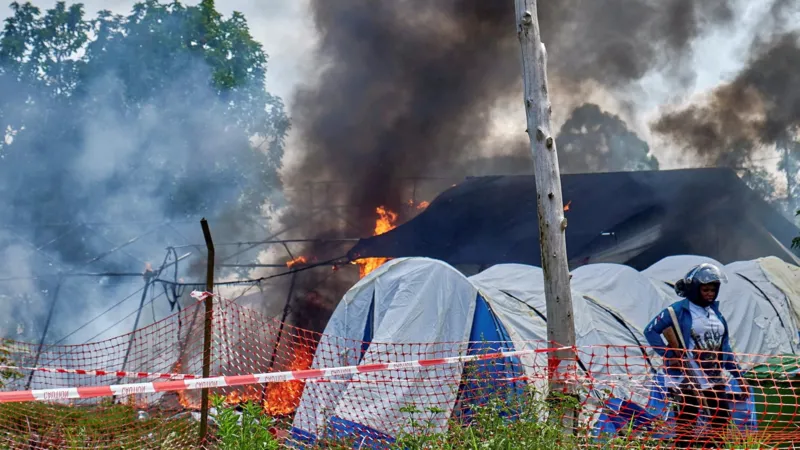
The situation quickly escalated. People in the crowd began throwing objects at the facility. Several tents used for isolation and treatment were set on fire. The incident took place at Rwampara General Hospital near Bunia in Ituri province, where most Ebola cases have been recorded.
Police responded by firing warning shots to disperse the crowd and regain control of the area.
Community reaction and confusion
Witnesses said the deceased was a well known local football player. His mother believed he had died from typhoid rather than Ebola, which added to the tension.
Local leaders reported that many people in the area do not trust official information about the virus. Some residents believe Ebola is not real or think it is linked to outside organizations and health programs for financial gain.
Officials said this lack of trust and awareness is making the response more difficult, especially in remote communities.
Medical response and security measures
Health workers explained that Ebola burial protocols are essential because the virus remains highly contagious after death. Safe handling of bodies is necessary to prevent further spread.
During the unrest, one healthcare worker was injured by stones thrown from the crowd. Medical staff were placed under military protection while security forces restored order at the hospital.
Several treatment tents were destroyed in the fire, and at least one body prepared for burial was lost in the chaos.
Government response
Authorities described the situation as very serious and concerning for public safety. Officials stated that efforts are being increased to improve communication with local communities and to rebuild trust in health services.
They emphasized the need for better public awareness so that families understand why strict medical procedures are required during outbreaks.