
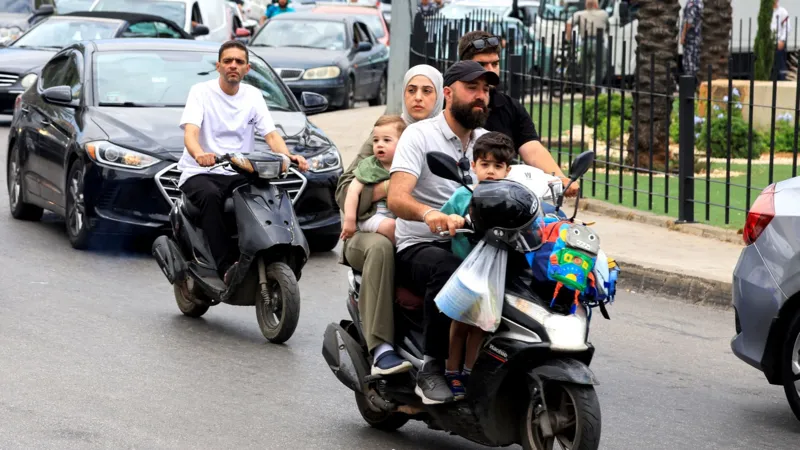
Thousands Flee Beirut’s Southern Suburbs
Israel has announced new military strikes on the southern suburbs of Beirut after accusing Hezbollah of carrying out repeated rocket and drone attacks. The latest escalation has increased fears of a wider regional conflict despite ongoing efforts to maintain a ceasefire.
Israeli Prime Minister Benjamin Netanyahu and Defence Minister Israel Katz said they had ordered attacks on what they described as Hezbollah targets in the Dahieh district, a known Hezbollah stronghold in southern Beirut.
Following the announcement, thousands of residents rushed to leave the area. Roads quickly became congested as families packed their vehicles with essential belongings and searched for safer locations.
Israel Links Beirut Strikes to Hezbollah Attacks
Israeli officials stated that Hezbollah had repeatedly violated the ceasefire agreement announced in April. According to Israel, the strikes are a response to attacks targeting Israeli civilians and communities in northern Israel.
Defence Minister Katz warned that calm would not return to Beirut unless attacks against northern Israel stopped. Shortly afterward, the Israeli military issued evacuation warnings to residents in parts of Dahieh.
The warning triggered a mass movement of civilians. Families carrying suitcases, blankets, and personal belongings left their homes as concerns over further airstrikes grew.
Civilians Face Growing Uncertainty
Many residents expressed support for Hezbollah while also prioritizing the safety of their families. Parents, children, and elderly relatives traveled together through heavy traffic as they sought shelter away from potential conflict zones.
Although Israeli forces have carried out strikes in Beirut since the April ceasefire, the frequency of attacks has significantly decreased compared to earlier stages of the conflict. However, the latest developments have raised concerns that tensions could rise again.
Diplomatic Efforts Continue
Lebanese officials said they are relying on diplomatic channels, particularly US mediation efforts, to prevent further escalation and reduce civilian casualties.
US Secretary of State Marco Rubio recently presented a proposal aimed at gradually reducing tensions between the parties. Regional leaders continue discussions in hopes of preventing a broader conflict.
Iran, a longtime supporter of Hezbollah, has also stressed that any future agreement should include stability in Lebanon. Iranian officials argue that peace efforts should apply across all fronts in the region.
Violence Continues in Southern Lebanon
While attention remains focused on Beirut, fighting has continued in southern Lebanon. Local media reported that Israeli airstrikes killed several people in villages and towns across the region.
At the same time, the Israeli military confirmed the death of one soldier during operations in southern Lebanon. Reports suggest a drone attack may have been responsible.
Rising Casualties Highlight Human Cost
The conflict has caused significant losses on both sides. Lebanese health authorities report that more than 3,400 people have died since the war began. The figures include both civilians and fighters.
Israel has reported the deaths of 24 soldiers and four civilians during the conflict.
As military operations continue and diplomatic efforts struggle to gain momentum, many residents across Lebanon and Israel remain uncertain about what comes next.