France is facing a growing debate over air conditioning as record breaking temperatures sweep across the country. With temperatures approaching 40°C in several regions, policymakers, environmental groups, and citizens are reassessing the role of cooling systems in a warming climate.
For decades, France has maintained a cautious approach toward air conditioning. Only about 25% of French households currently use air conditioning units. This figure remains significantly lower than countries such as Spain and Italy, where around half of homes have cooling systems. In the United States and Japan, air conditioning is present in roughly 90% of households.
Record Heat Pushes Demand Higher
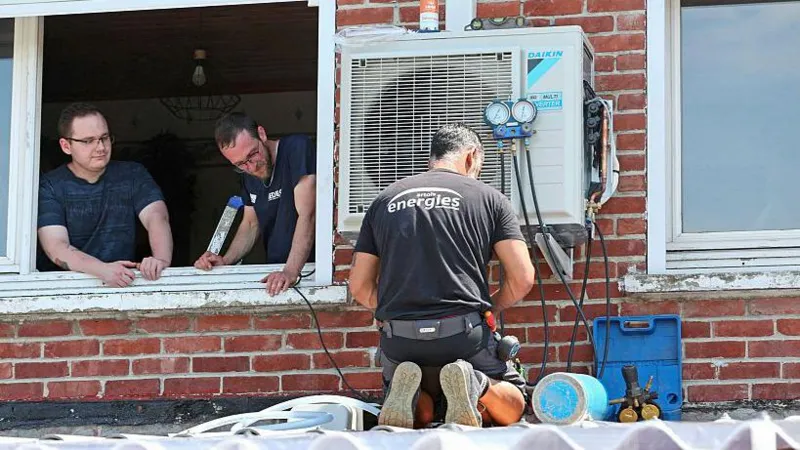
The recent heatwave has increased demand for portable air conditioning units across France. Many residents are turning to cooling devices to cope with uncomfortable indoor temperatures, especially during the night.
The extreme weather has also disrupted daily life. Thousands of schools have temporarily closed because classrooms became too hot for students and teachers. Healthcare workers have also reported difficult working conditions as hospitals struggle to maintain comfortable temperatures.
Many families now view air conditioning as a practical necessity rather than a luxury. As heatwaves become more frequent, public demand for cooling solutions continues to grow.
Political Leaders Clash Over Cooling Policies
The issue has become a major political topic. Marine Le Pen has called for a large scale rollout of subsidized air conditioning systems across the country. Supporters argue that wider access to cooling technology would help protect vulnerable populations during periods of extreme heat.
At the same time, some environmental leaders are beginning to soften their opposition. Marie Tondelier, leader of France’s Ecologists party, recently acknowledged that certain public buildings, including schools and hospitals, may now require air conditioning to ensure public safety.
Her comments mark a notable shift in a movement that has traditionally opposed widespread air conditioning use.
Environmental Concerns Remain
Despite growing support for cooling systems, environmental concerns continue to influence the debate. Critics argue that air conditioning addresses the symptoms of climate change rather than its underlying causes.
Cooling systems consume electricity, which can increase energy demand. While France relies heavily on nuclear power, many countries still generate electricity through fossil fuels, which contribute to greenhouse gas emissions.
Environmental experts also point to refrigerant gases used in air conditioning systems. These gases can contribute to global warming if they leak into the atmosphere. In addition, outdoor cooling units release hot air into surrounding areas, which can intensify urban heat conditions.
France Faces a New Climate Reality
As temperatures continue to rise, France appears to be entering a new phase in its climate strategy. The discussion is no longer focused on whether air conditioning should be used. Instead, attention is shifting toward how cooling systems can be deployed responsibly while minimizing environmental impacts.
With more frequent heatwaves expected in the future, France may need to balance public health needs with long term climate goals. The ongoing debate highlights the challenge of adapting to extreme weather while continuing efforts to reduce global warming.