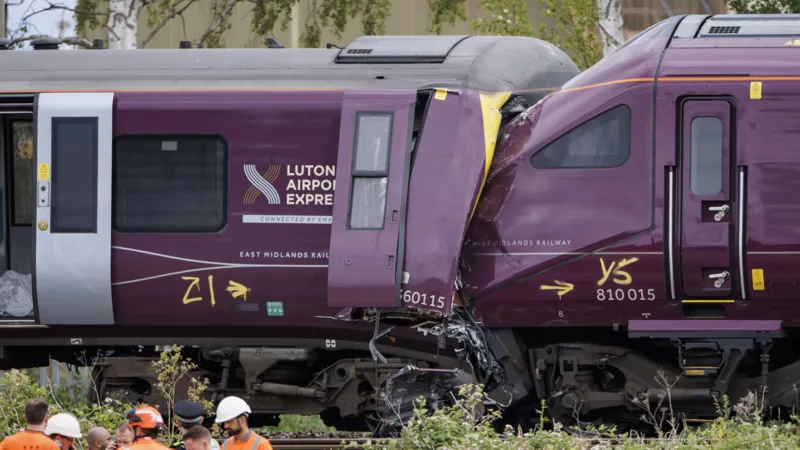
A preliminary investigation has revealed that a train driver passed a red signal moments before a fatal railway collision in Bedfordshire that left one person dead and more than 160 injured.
The crash happened on Friday near Elstow, south of Bedford, when a London-bound train from Corby struck the rear of another service that had travelled from Nottingham.
Train driver Shaun Burton, 60, lost his life in the collision. Authorities also confirmed that 162 people suffered injuries. According to police, 53 passengers remain in hospital, while eight are in critical condition.
Investigation Reveals Red Signal Was Passed
The Rail Accident Investigation Branch (RAIB) said the Corby service continued beyond a red signal shortly before the crash at around 5:15 pm.
Investigators are still examining what warning the driver received from the train’s Automatic Warning System (AWS). At this stage, officials have not determined whether the system provided the correct signal indication.
Fault Stopped Train Unexpectedly
The investigation found that the Nottingham service had stopped unexpectedly because of a fault within its Automatic Warning System equipment.
Data collected from the railway network indicates that the signal behind the stationary train showed a red warning. This signal should have instructed approaching trains to stop before reaching the occupied section of track.
Brakes Activated Seconds Before Impact
Investigators reported that the Corby train’s braking system activated about nine seconds before the collision.
At the time the brakes engaged, the train was travelling at approximately 76 mph. The speed dropped to around 49 mph before impact, reducing the severity of the crash but failing to prevent it.
Safety Systems Under Scrutiny
The full investigation will examine the actions of everyone involved and assess any factors that may have contributed to the incident.
Dave Calfe, General Secretary of train drivers’ union ASLEF, welcomed the investigation. He suggested that additional safety measures could have prevented the collision.
Calfe pointed to the Train Protection and Warning System (TPWS), which automatically intervenes when a train passes a red signal. He said wider installation of the technology could improve railway safety and help prevent similar accidents.
Full Investigation Continues
Investigators will continue analysing train data, signalling systems, safety equipment, and operational procedures.
The findings of the full report are expected to provide a clearer understanding of how the tragedy occurred and what improvements may be needed to strengthen rail safety across the network.