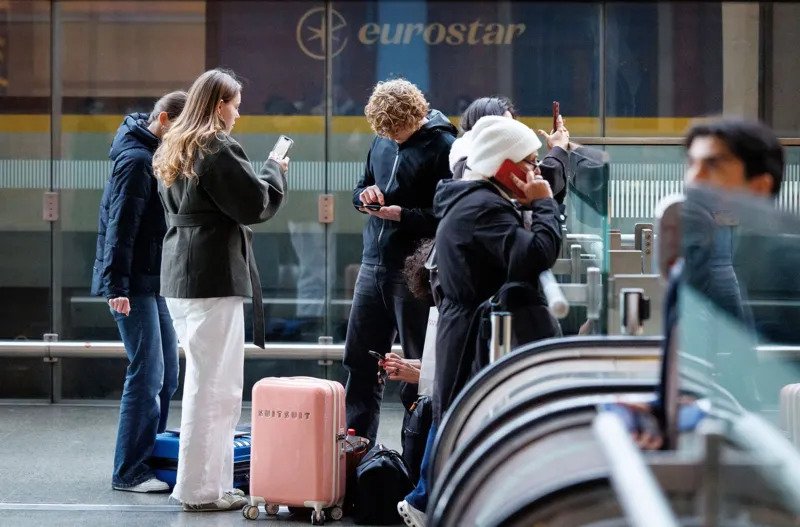
Travellers heading to Europe this summer may experience longer waiting times at airports because of the European Union’s new Entry/Exit System (EES). The digital border control program has now become fully operational across the Schengen Area and is changing the way non-EU visitors enter and leave participating countries.
Many travel experts have warned that the new checks could create delays during peak holiday periods. As millions of people travel across Europe, airports are preparing for increased passenger processing times.
What Is the EU Entry/Exit System?
The EU Entry/Exit System is a digital border management program designed to replace traditional passport stamping. Instead of receiving a manual stamp, travellers now have their entry and exit information recorded electronically.
The system applies to non-EU citizens entering the Schengen Area. This includes UK travellers visiting popular destinations such as France, Spain, Portugal, Italy, Greece, and other participating countries.
Officials introduced the system to improve border security and track the movement of visitors more accurately.
What Information Must Travellers Provide?
Under the new rules, travellers must complete biometric registration when entering the Schengen Area for the first time.
This process includes:
- A passport scan
- Fingerprint registration
- A digital facial photograph
Most passengers complete these checks at automated kiosks located at airports. However, border officers may process some travellers manually. Children under 12 years old are generally exempt from fingerprint collection.
Once travellers leave the Schengen Area, authorities verify the stored information to confirm their departure.
Why Are Airport Delays Expected?
The biometric registration process takes longer than a standard passport check. As a result, airport authorities expect increased waiting times, especially during busy travel periods.
Since the rollout began last year, several airports have reported smooth operations. However, others have experienced significant delays during peak hours.
Travel industry representatives believe some airports could face lengthy queues when passenger numbers rise sharply. In certain cases, travellers may wait several hours before clearing border control.
What Should Travellers Do Before Flying?
Passengers travelling to Europe should arrive at airports earlier than usual and allow extra time for border procedures.
Checking airline guidance before departure can also help travellers prepare for any additional requirements. Furthermore, travellers should keep passports ready and follow airport instructions to speed up the registration process.
Although the new system aims to strengthen security and modernize border management, it may take time before airports fully adjust to the additional checks.
Outlook for Summer Travel
The EU Entry/Exit System marks a major change in European border control procedures. While authorities expect the system to improve efficiency in the long term, travellers could experience delays during the busy summer season.
For now, planning ahead and allowing extra time at airports remains the best way to avoid unnecessary stress and travel disruptions.