
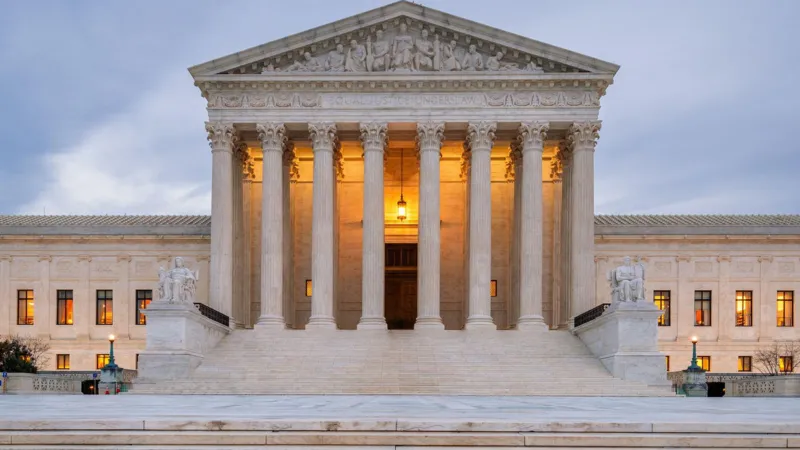
The US Supreme Court has ruled in favor of the Trump administration, allowing it to end Temporary Protected Status (TPS) for hundreds of thousands of immigrants from Haiti and Syria. The decision marks a major shift in US immigration policy and could affect TPS holders from other countries in the future.
Court Clears Path for TPS Termination
In a 6 to 3 decision, the Supreme Court overturned lower court rulings that had blocked the administration from ending TPS protections. The ruling impacts approximately 350,000 Haitian immigrants and around 6,100 Syrian immigrants currently living in the United States.
TPS allows people from countries facing war, natural disasters, or other serious crises to live and work legally in the United States. The program also protects them from deportation during the designated period.
Why Haitians and Syrians Received TPS
The US government granted TPS to Haitian nationals after the devastating earthquake that struck Haiti in 2010. Syrian nationals received the same protection after the country’s civil war began in 2012.
For years, many beneficiaries renewed their status through government extensions. However, the Trump administration argued that these protections should not continue indefinitely.
Supreme Court’s Reasoning
Justice Samuel Alito, who wrote the majority opinion, stated that federal law limits the courts’ ability to review government decisions regarding TPS. He said Congress gave immigration authorities broad power to determine whether protections should continue.
The court also rejected arguments that the administration acted in a racially discriminatory manner. According to the ruling, the plaintiffs were unlikely to prove that the policy violated equal protection rights under the Fifth Amendment.
Another Victory for Trump on Immigration
The Supreme Court also delivered another important immigration ruling on the same day. In a separate 6 to 3 decision, the court allowed the Trump administration to enforce a policy restricting asylum applications at the US-Mexico border.
Under the ruling, migrants stopped on the Mexican side of the border cannot apply for asylum until they physically enter the United States. The administration argued that federal law applies only to migrants who have already arrived in the country.
The policy was first introduced during Trump’s earlier presidency. Former President Joe Biden later ended the measure in 2021. The new ruling now allows its return.
Potential Impact on Future Immigration Cases
Immigration experts believe the decision could influence TPS protections for people from other countries. The ruling strengthens executive authority over immigration matters and may lead to additional policy changes in the coming months.
For many Haitian and Syrian immigrants, the decision creates uncertainty about their future legal status in the United States. Advocacy groups are expected to continue challenging immigration restrictions through other legal avenues.