Delayed Monsoon Creates Fresh Challenges for Farmers
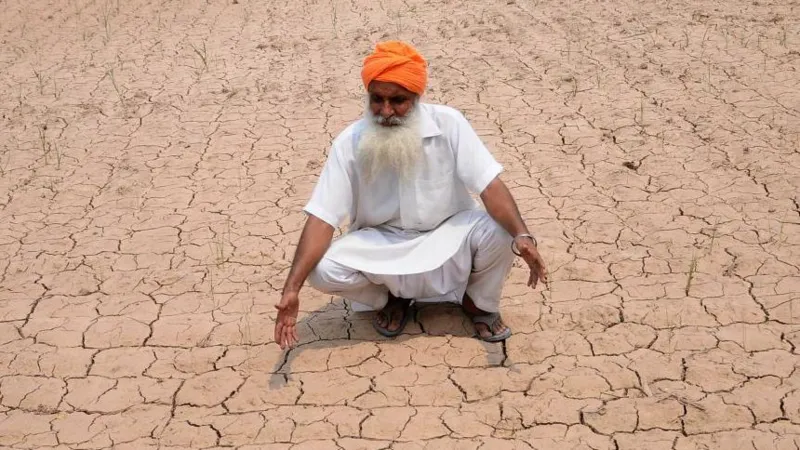
India has experienced its driest June in the last 12 years, creating fresh concerns for millions of farmers who depend on seasonal monsoon rains. According to the country’s weather authorities, June 2026 also ranks as the fifth driest June since nationwide rainfall records began in 1901.
The weak start to the monsoon season has slowed farming activities across many regions. Weather officials have also predicted below normal rainfall during July, increasing concerns about crop production and food security in the coming months.
Crop Sowing Drops Across the Country
The delay in rainfall has already affected the sowing of major summer crops. Government figures show that farmers planted crops on 18.27 million hectares of land by the end of June. During the same period in 2025, they had planted 23.65 million hectares.
This represents a decline of almost 23 percent, highlighting the impact of delayed rains on agricultural activities.
Rice cultivation has suffered the biggest setback. Farmers have planted rice on only 2.58 million hectares, compared with 3.44 million hectares at the same time last year. This marks a drop of nearly 25 percent.
Summer Crops Depend on Monsoon Rainfall
India’s main summer crops include rice, pulses, coarse cereals, oilseeds, cotton, sugarcane, and jute. These crops rely heavily on the southwest monsoon, which normally provides around 70 percent of the country’s annual rainfall.
The monsoon usually reaches the southern state of Kerala around 1 June before moving gradually across the rest of India. This year, however, the rains arrived three days late. After reaching Kerala, the monsoon slowed for nearly two weeks in several western regions.
As a result, many farmers postponed field preparation and crop planting while waiting for enough rainfall.
Limited Irrigation Increases the Risk
Almost half of India’s cultivated farmland does not have reliable irrigation facilities. Instead, farmers depend mainly on rainfall to grow their crops.
Because of this, even a short delay in the monsoon can reduce planting activity, affect crop growth, and lower agricultural production. Experts also warn that poor rainfall could reduce domestic oilseed production, forcing India to import more edible oils to meet demand.
Rice Stocks Provide Some Relief
Despite the slow start to the season, the situation is not entirely negative. The monsoon continues until September, giving farmers additional time to complete sowing if rainfall improves during the coming weeks.
India also has a strong rice reserve. Government data shows that official rice stocks reached 39.7 million tonnes on 1 July, almost three times higher than the required buffer stock of 13.5 million tonnes.
In addition, authorities expect another 29.8 million tonnes of rice to enter government storage after mills process paddy that has already been purchased from farmers.
Outlook Remains Uncertain
The coming weeks will play an important role in determining the success of India’s summer harvest. If rainfall increases during July and August, farmers may recover much of the delayed sowing.
However, if dry weather continues, agricultural production could face greater pressure, affecting both farmers’ incomes and the country’s food supply.