In a rare and extraordinary move, Federal Reserve Chair Jerome Powell released an unscheduled video statement on social media. His words left many wondering if it was a deepfake, given the unusual nature of a central banker speaking to the public.
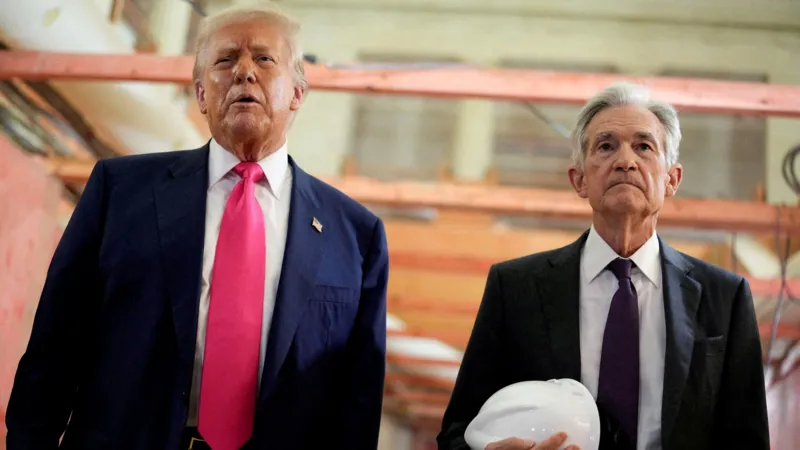
The tension between President Trump and Powell has been ongoing, largely centered on US interest rates. While the official trigger appears to be a renovation project at the Fed’s headquarters, Trump’s actions suggest a deeper motive. The president even visited the building personally to inspect the work.
Beyond the renovation, Trump has criticized Powell and attempted to influence the Fed’s interest rate decisions. The goal seems to be to lower US interest rates for political or economic advantage.
In his statement, Powell revealed that the Department of Justice had served criminal subpoenas over his testimony.
He described these actions as “unprecedented” and emphasized that they were part of a broader pattern of political on the Fed.
Powell made it clear that the building project was only a pretext. The real issue is whether the Federal Reserve will remain free to set interest rates based on economic data.
This is a critical concern not just for US markets and mortgage rates, but for global financial stability. The Fed’s independence serves as a foundation for trust in global markets. While the Fed is not immune to criticism, Powell’s statement underscores the seriousness of the threat to its autonomy.
International examples, like Turkey, show how central bankers can face severe consequences when governments try to override their independence. Powell’s public comments are a warning that the US might be approaching a similar scenario.
Markets, particularly US Treasuries, will likely respond to this confrontation, and the implications could extend far beyond American borders. Even though Powell’s term is set to end in May, meaning a Trump-friendly successor could take over, the current situation raises the stakes. US interest rates are decided by a committee, not a single individual, but the chair’s influence is significant.
There’s also concern that the administration could attempt to use Fed tools, like swap lines.Powell’s independence makes such maneuvers unlikely under his leadership.
This development occurs alongside other controversial US actions, including militarized immigration enforcement, potential territorial threats. Some Republicans in Congress may view Powell’s bold stance as a necessary check on executive power.
Even the unscheduled video could sway markets, similar to how statements by Bank of England Governor Andrew Bailey affected financial confidence.
Historically, Trump has faced setbacks when global markets reacted negatively, as with last April’s tariff missteps. Powell’s intervention may mark another pivotal moment in the balance between politics and economic stability.