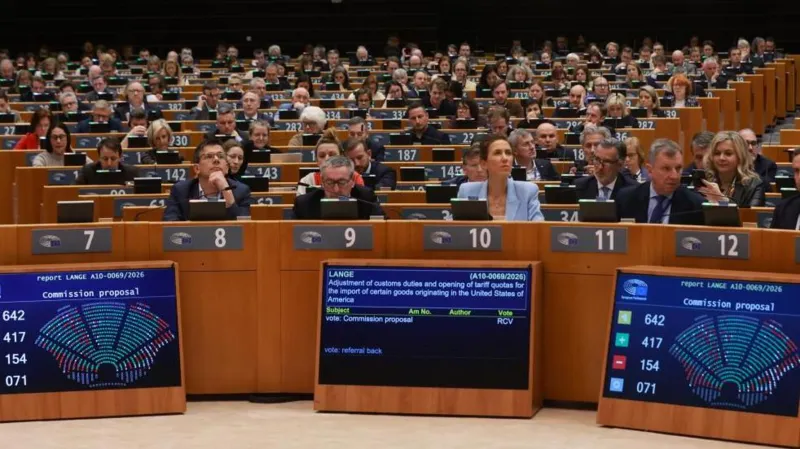
After months of unrest triggered by Donald Trump’s tariff threats, the European Parliament approved a new EU/US trade agreement. The proposal was supported by lawmakers on Thursday, but strict safeguards were added to protect European interest.The deal was approved by a large majority, 417 in support, 154 against, and 71 with abstentions.
The EU-US Trade Agreement: Key Terms
Tariffs for most EU products entering the US are set to 15% under the agreement. The rate is now lower than earlier, when it was 30% and caused concern in Europe.
The EU agreed in return to eliminate import tariffs on US industrial products. In return, Europe will increase its investment in the United States.
European legislators have added new safeguards
The European Parliament added several protection measures to the agreement.
If the US increases tariffs over 15% or introduces additional duties, the EU may suspend the deal. The lawmakers also added a clause that would stop the agreement if the US threatened the EU territorial sovereignty.
The “sunrise” clause is another important addition. It ensures the EU will not begin to reduce tariffs until the US fulfills its obligations. They include lower tariffs for EU products that do not contain more than 50 percent steel or aluminium.
The agreement will automatically end on 31 March 2020 unless the parties decide to extend.
Trade relations and economic impact
EU officials have described the vote in favor of Brexit as an important step. Maros SEFCIOC, the EU’s Trade Commissioner called this a critical moment. Valdis Dombrovskis, its Economy Commissioner said that EU officials would remain alert.
In 2024, the United States and European Union will remain as the two largest trading partners in the world. They will exchange goods and services valued at more than EUR1.6 trillion in 2024. This is nearly a third of all global trade.
The value of goods traded alone was $976 billion. US imports from EU totaled $606 billion and exports of $370 billion.
Commitments to energy and investments
In order to meet the terms of this agreement, EU intends to spend more on US energy. Included are liquefied gas, nuclear fuel, and oil.
Donald Trump stated previously that the EU can invest as much as $600 billion dollars in the US. The EU could invest up to $600 billion in the US, including military equipment purchases and an increase of energy expenditure of up to $700 billion.
Trade tensions continue and the future outlook
Tensions persist despite progress. Trump used tariffs to reduce the US’s trade deficit and reshape international trade.
The EU is working to diversify their trade partners since the global tariff announcement last year. The EU wants to minimize risks and improve its global market position.