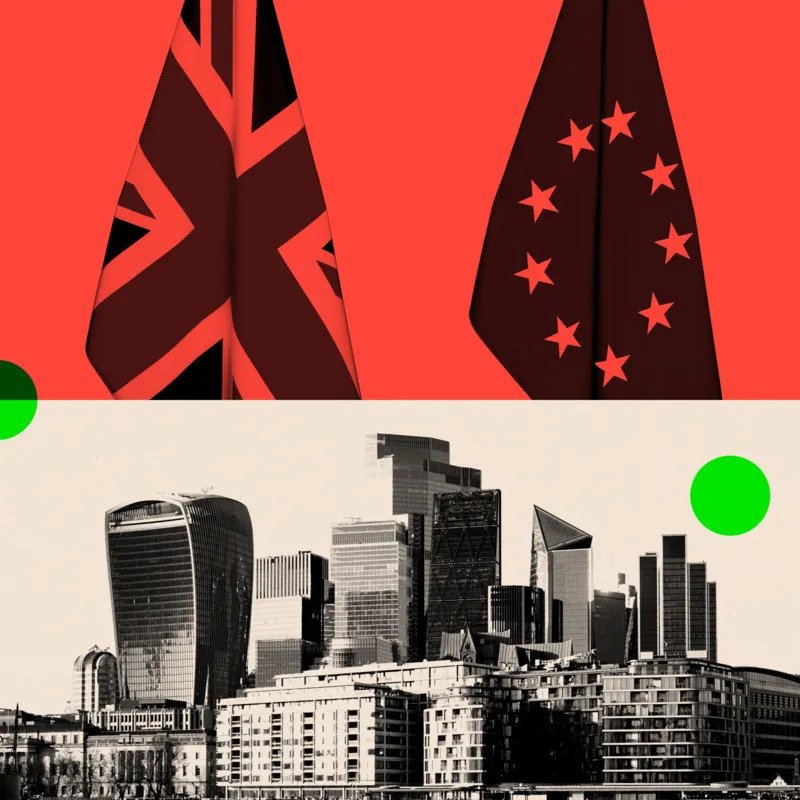
A decade after the Brexit vote, the economic effects of the UK’s departure from the European Union are becoming easier to measure. While many British businesses continue to operate successfully, several companies say new trade barriers have made growth more difficult.
Brexit’s Impact on UK Businesses
One example comes from Eskimo, a Bristol based company that produces modern and energy efficient electric radiators. The business launched shortly after the UK officially left the EU in 2020.
The company developed innovative heating products and expected strong demand across Europe. Early sales looked promising, and its manufacturing operations in Birmingham remained busy.
However, company founder Phil Ward says Brexit created new obstacles for exporters. In 2020, around 40% of Eskimo’s exports went to EU countries. By 2025, that figure had fallen to just 5%.
Export Challenges After Leaving the EU
Although the UK and EU agreed to a tariff free trade deal in late 2020, businesses still faced additional paperwork and regulatory requirements.
According to Ward, these administrative processes increased costs and caused delays. Many potential customers also worried about the extra complexity involved in buying products from the UK.
As a result, Eskimo stopped selling directly to many European consumers. Plans to expand into Germany also failed to gain momentum.
The company encountered further challenges when exporting products to Australia and New Zealand. Both countries follow international safety standards that closely align with European certification requirements.
Declining Trade with Europe
Trade researchers have identified similar trends across the wider UK economy.
The UK Trade Policy Observatory at Sussex University reported a 26% decline in the variety of UK exports sent to EU markets by 2023.
Meanwhile, a study from Aston University Business School found even larger reductions. Researchers estimated a 53.8% fall in export varieties and a 31.5% decline in import varieties.
These figures refer to the number of different products traded between the UK and individual EU countries.
What Economists Say About Brexit
Many economists warned before the 2016 referendum that leaving the EU could reduce long term economic growth. Today, a large number of experts believe those effects are now visible in trade and investment data.
However, measuring Brexit’s true impact remains challenging.
Researchers must compare today’s economy with a scenario in which Brexit never happened. This process involves complex modelling and statistical analysis.
Several major global events have also influenced economic performance during the same period. These include the Covid-19 pandemic, the war in Ukraine, and recent energy market disruptions linked to tensions in the Middle East.
Economists generally argue that their calculations account for these events. Nevertheless, some analysts continue to debate the size of Brexit’s overall impact.
The Bigger Economic Picture
Despite concerns, some of the most severe economic forecasts made before the referendum did not materialize.
Predictions of an immediate economic collapse or depression proved inaccurate. Instead, any negative effects appeared gradually over time rather than through a sudden recession.
Ten years after the Brexit vote, the debate continues. While many businesses report new trade barriers and reduced access to European markets, economists are still assessing the full long term consequences for the UK economy.
What is becoming increasingly clear is that Brexit has reshaped the way British companies trade with Europe, and its economic effects remain an important topic for businesses, policymakers, and investors alike.