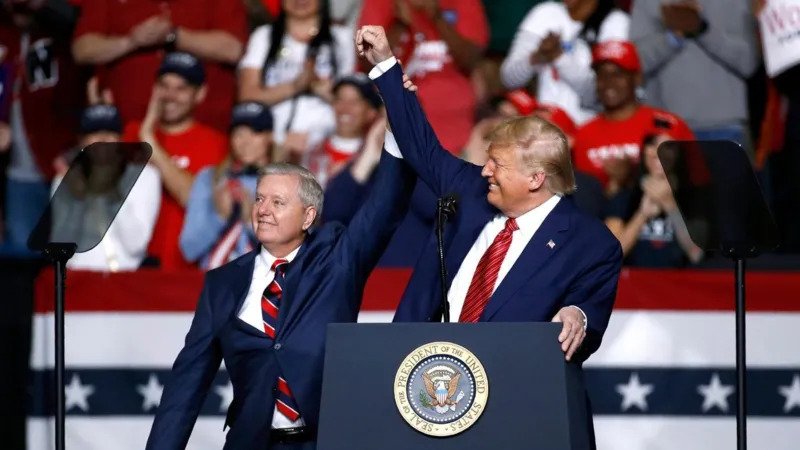
Lindsey Graham, a longtime Republican senator from South Carolina, has died at the age of 71 after a brief illness. His more than two decade career in the US Senate reflected the major changes within the Republican Party during the rise of Donald Trump.
Graham built his political identity around several key issues, including a strong national security approach, support for Israel, opposition to Iran’s government, and efforts to limit Russia’s influence around the world.
After winning his Senate seat in 2002, Graham became a close ally of Senator John McCain. Like McCain, he was known as a conservative politician who sometimes worked across party lines.
From Trump Critic to Close Political Ally
During his 2015 presidential campaign, Graham promoted cooperation between Republicans and Democrats. He often spoke about reducing political divisions and finding solutions through discussion.
However, his relationship with Donald Trump changed dramatically. During the 2016 Republican primary, Graham strongly criticised Trump after Trump attacked John McCain’s military service.
Graham called Trump’s comments unacceptable and questioned his ability to lead the country. The conflict became personal when Trump shared Graham’s phone number at a rally, leading to a flood of angry messages toward the senator.
Later, Graham continued his criticism and described Trump as a divisive figure. He also warned that choosing Trump as the Republican nominee could damage the party.
Graham’s Shift After Trump Won the Presidency
After Trump won the 2016 presidential election, Graham changed his approach. He became one of Trump’s strongest supporters in the Senate.
The two politicians developed a close relationship and often spent time together, including playing golf. Graham also became a frequent defender of Trump’s policies during television appearances and political debates.
One of Graham’s most notable moments came during the confirmation of Supreme Court nominee Brett Kavanaugh. Graham strongly defended Kavanaugh during the confirmation process after allegations of sexual misconduct were made against him. Kavanaugh denied the allegations and later secured Senate approval.
A Complex Political Legacy
Although Graham supported Trump for much of his presidency, he did not fully agree with him on every issue. After Trump lost the 2020 election to Joe Biden, Graham briefly separated himself from some of Trump’s claims about the election results.
Throughout his Senate career, Lindsey Graham remained a significant figure in American politics. His journey showed the changing direction of the Republican Party and highlighted how politicians adapted to the powerful influence of the Trump era.
His supporters viewed him as a skilled political strategist, while critics questioned his shift from a Trump opponent to one of his closest allies.
Graham’s legacy will be remembered as a story of political change, compromise, and survival during one of the most transformative periods in modern American politics.