
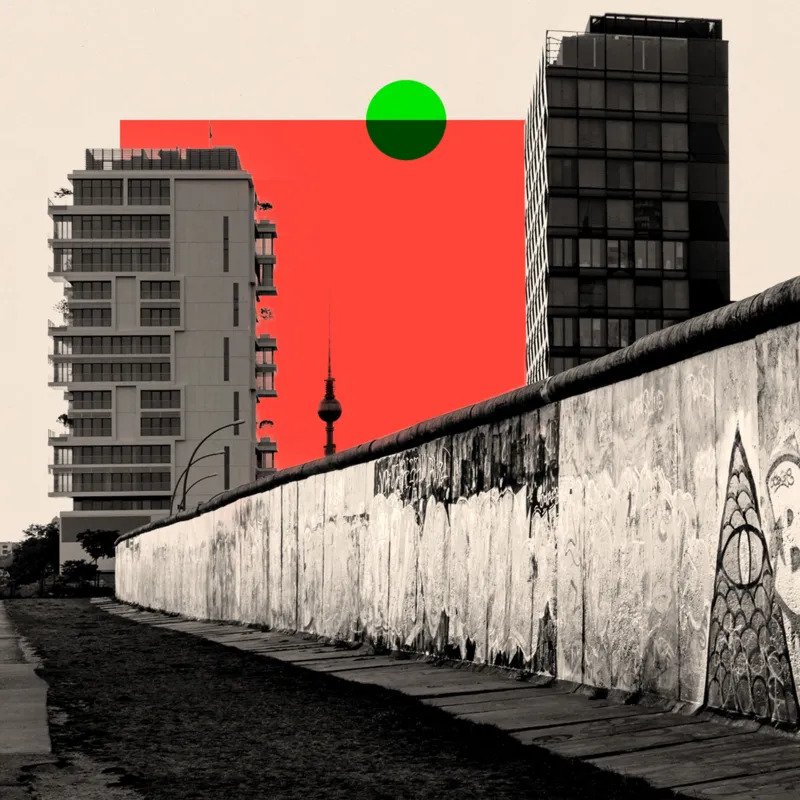
A Generation Shaped by Change
Jan-Niklas Hustedt was born in East Germany in 1989, only a few weeks before the Berlin Wall came down. Today, the 36-year-old describes himself as a “child of reunification” because he grew up during one of Germany’s biggest transformations.
He remembers attending techno parties in the abandoned canteen of a former pump factory in his hometown of Oschersleben. The factory had once provided many jobs, but it struggled after German reunification and drastically reduced its workforce.
For Jan-Niklas, those empty buildings became symbols of a changing community.
Businesses Collapsed After Reunification
When East and West Germany reunited, many companies in the former communist East faced a difficult reality. They suddenly had to compete in a global, profit-driven economy.
Many businesses could not adapt. Some downsized, while others closed completely. As job opportunities disappeared, thousands of young people moved to western Germany in search of better careers and higher wages.
“You hear all the stories,” Jan-Niklas says. “Lots of people left because the opportunities were in the west.”
East Germany’s Population Continues to Shrink
Germany’s overall population has grown by around 3.8 million people over the past 35 years, largely because of immigration.
However, the picture looks very different in eastern Germany.
The five states that once formed the German Democratic Republic (GDR) have lost around 16% of their population since reunification. East Berlin is not included in these figures.
Among these states, Saxony-Anhalt has experienced the biggest decline. Its population has fallen by about 26%, according to official statistics.
Areas Face an Uncertain Future
Demographers expect population numbers to continue falling across many rural parts of eastern Germany.
Several factors are driving this decline. Many young and educated residents left the region after reunification. At the same time, Germany’s low birth rate has created additional challenges.
Government maps show that the most severe population losses are likely to occur in less urbanized areas of eastern Germany. These regions already struggle with ageing populations and shrinking workforces.
The Divide Between East and West Remains
More than three decades after reunification, Germany still faces significant differences between its eastern and western regions.
Population decline has become one of the clearest signs of these long-standing divisions. While many western cities continue to grow, large parts of the East are losing residents, jobs, and economic opportunities.
For communities like Oschersleben, the memories of reunification remain deeply connected to empty factories, departing neighbors, and an uncertain demographic future.