
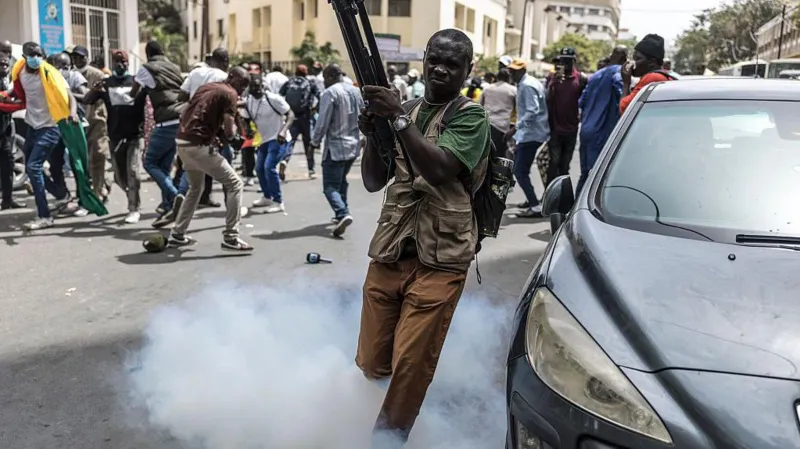
Senegal’s parliament has approved a controversial package of constitutional reforms that would increase the powers of lawmakers while limiting some presidential authority. The decision has sparked political tensions and street protests, as critics claim the changes are driven by political rivalry rather than democratic reform.
The reforms were passed with a large majority after a heated debate in parliament. Demonstrators gathered outside the National Assembly to protest the proposed constitutional changes, while opposition lawmakers staged a walkout during the session.
Political Alliance Turns Into Power Struggle
President Bassirou Diomaye Faye and parliamentary Speaker Ousmane Sonko came to power together in 2024 after promising major political and economic reforms. However, their relationship has steadily deteriorated over the past several months.
The disagreement intensified after Sonko publicly criticized President Faye’s handling of Senegal’s economic and debt challenges. In May, President Faye removed Sonko from the position of prime minister. Soon afterward, lawmakers from the ruling Pastef party elected Sonko as Speaker of the National Assembly, giving him significant influence over parliament.
Key Constitutional Changes
The proposed constitutional reforms would strengthen the role of parliament and increase oversight of government decisions.
The main proposals include:
- Expanding the investigative powers of parliamentary committees.
- Requiring the government to present agreements involving natural resources to parliament.
- Replacing the current Constitutional Council with a new Constitutional Court consisting of nine members instead of seven.
- Preventing a sitting president from leading a political party while serving in office.
- Restricting a president from signing certain laws between a presidential election and the inauguration of the newly elected president.
Supporters argue these measures will improve the balance of power among the executive, legislative, and judicial branches of government.
Opposition Raises Concerns
Opposition parties and civil society organizations strongly oppose the reforms. They argue that the changes are politically motivated and designed to weaken President Faye while increasing the influence of Speaker Sonko and the parliamentary majority.
Outside parliament, police used tear gas to disperse protesters who had gathered to oppose the constitutional amendments. The demonstrations reflected growing public concern over Senegal’s political future.
Referendum Planned
Justice Minister Moussa Sarr announced that President Faye intends to submit the constitutional reforms to a national referendum. However, no official voting date has been announced.
Speaker Sonko questioned whether the president has the authority to organize a referendum after parliament had already approved the amendments with a majority vote.
The debate has created fresh uncertainty in Senegal’s political landscape, with both supporters and critics waiting to see whether the proposed reforms will receive public approval in a nationwide vote.
What Happens Next?
The constitutional reforms are expected to remain at the center of Senegal’s political debate in the coming months. If the referendum moves forward, voters will decide whether the proposed changes become part of the country’s constitution. The outcome could significantly reshape the balance of power between the presidency and parliament.