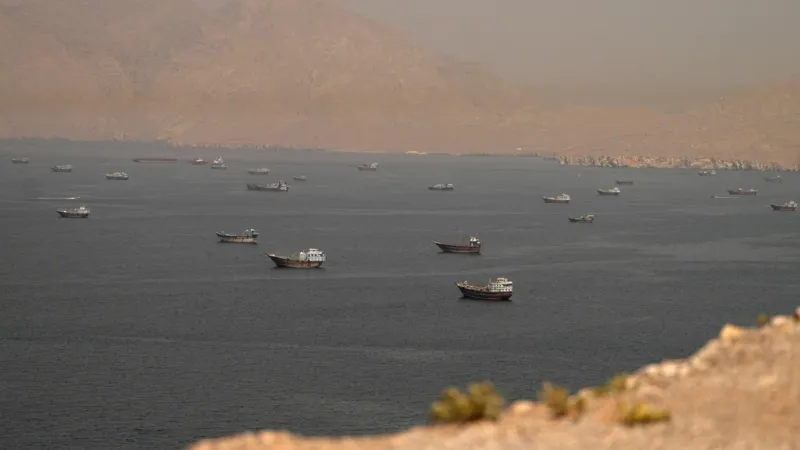
Tensions Rise Again in the Strait of Hormuz
The United States and Iran have exchanged fresh military strikes, with both sides accusing each other of violating a recently agreed ceasefire. The latest escalation has raised fears of a wider conflict in the Middle East and increased concerns over the security of one of the world’s busiest shipping routes.
The crisis began after a drone attack hit the Panama-flagged oil tanker MT Kiku in the Strait of Hormuz on Saturday. US Central Command (Centcom) blamed Iranian forces for the attack and said Tehran had ignored an opportunity to honor the ceasefire agreement.
In response, American fighter jets launched strikes on ten Iranian military targets near the Strait of Hormuz. According to Centcom, the operation targeted military equipment, communication centers, air defense systems, and drone storage facilities.
Iran Launches Missiles at US Bases
Iran’s Islamic Revolutionary Guard Corps (IRGC) quickly responded by firing ballistic missiles and drones at American facilities in Kuwait and Bahrain.
The IRGC claimed it struck eight major targets, including the Ali al-Salem Air Base in Kuwait and the US Fifth Fleet headquarters in Bahrain. Iranian officials said the attacks caused significant damage.
However, a US official told Reuters that there were no American casualties and no major damage to military facilities in the region.
Dispute Over the Ceasefire Agreement
Iran accused Washington of violating the ceasefire by attacking its coastal military posts. Iranian officials warned that continued US actions could completely end the agreement reached earlier this month.
The Iranian Foreign Ministry condemned the American strikes and described them as “brutal attacks.” It also accused the United States of failing to honor its commitments.
Meanwhile, Centcom insisted that Iran had broken the ceasefire first by attacking commercial vessels operating in the Strait of Hormuz.
Trump Issues Warning to Tehran
Following the latest strikes, President Donald Trump posted a strong message on Truth Social. He warned that Iran might force the United States to take even stronger military action.
Trump said there could come a time when America would no longer be able to remain reasonable and would have to finish the military operation it had started.
His comments further increased tensions between Washington and Tehran.
Kuwait and Bahrain Activate Defenses
After Iran launched its retaliatory attacks, both Kuwait and Bahrain activated their air defense systems.
Kuwaiti authorities confirmed that they were intercepting hostile missiles and drones and urged residents to follow security instructions.
Bahrain’s Interior Ministry also advised citizens to remain calm and move to safe locations if necessary.
Despite the military exchange, Centcom said commercial shipping in the Strait of Hormuz continues to operate.
Growing Concerns Over Regional Stability
The latest confrontation comes just one day after the United States carried out separate strikes against Iran in response to another attack on a Singapore-flagged cargo ship.
Iran maintains that some vessels have used unauthorized routes through Gulf waters and insists it has the right to control navigation under a recently signed memorandum of understanding.
With both nations blaming each other for breaking the ceasefire, fears are growing that the situation could escalate into a larger regional conflict.