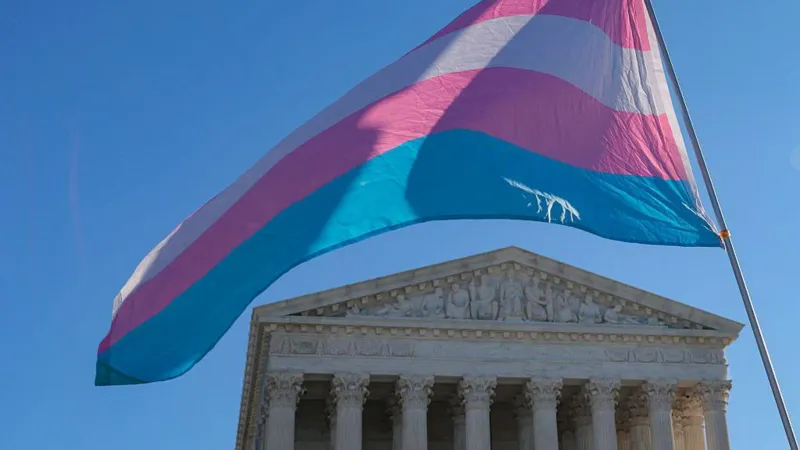
The US Supreme Court has ruled that states can legally ban transgender women from participating in female school and college sports. The decision marks a major legal victory for states that have introduced laws requiring athletes to compete based on their sex assigned at birth.
The ruling settles legal challenges against sports laws passed in Idaho and West Virginia. Both states argued that the restrictions protect fairness in women’s sports and preserve equal opportunities for female athletes.
Supreme Court Supports State Sports Laws
The court reviewed two separate cases filed by transgender students who challenged the state laws. One lawsuit argued that the bans violated the Equal Protection Clause of the US Constitution. The second claimed the laws conflicted with Title IX, a federal civil rights law that prohibits sex based discrimination in education.
After reviewing both cases, all nine Supreme Court justices agreed that the state laws do not violate Title IX. However, the court split on the constitutional question.
Six conservative justices concluded that the bans do not violate the Constitution. Three liberal justices disagreed and argued that the laws deny equal protection under the law.
Justice Brett Kavanaugh, who wrote the majority opinion, stated that neither the Constitution nor Title IX requires states to change the structure of women’s and girls’ sports across the country.
Liberal Justices Express Strong Opposition
Justice Sonia Sotomayor issued a partial dissent. She argued that the court adopted a limited interpretation of equal protection and failed to fully consider the rights of transgender athletes.
Her opinion reflected concerns that the ruling could reduce legal protections for transgender students in educational sports programs.
Idaho Case Became the Center of the Debate
One of the most closely watched cases involved transgender runner Lindsay Hecox, who challenged Idaho’s law soon after it became effective. Earlier federal courts temporarily blocked the law, saying the state had not presented enough evidence to prove that the restrictions were necessary to protect fairness in women’s sports.
Idaho lawmaker Barbara Ehardt defended the legislation from the beginning. She said the law was designed to prevent biological males from competing against girls and women in female sports divisions.
Growing Number of States Have Passed Similar Laws
Idaho became the first state to pass this type of legislation in 2020. Since then, more than two dozen states have introduced similar bans covering school and college athletics.
Supporters believe transgender women may have physical advantages that create an uneven playing field in female competitions. Critics argue that the bans discriminate against transgender athletes and limit their opportunities to participate in sports.
Trump Administration Also Backed Restrictions
The issue became a major topic during President Donald Trump’s 2024 election campaign. After returning to office, he signed an executive order aimed at preventing transgender women from competing on female sports teams in schools and colleges.
Following the order, the NCAA updated its policy and barred transgender women from participating in women’s college sports.
What the Ruling Means
The Supreme Court’s decision gives states stronger legal authority to enforce laws that separate school and college sports based on sex assigned at birth. At the same time, the ruling continues the national debate over balancing fairness in women’s athletics with the rights of transgender athletes.
As more states adopt similar policies, legal and political discussions over transgender participation in sports are expected to continue.