Coastal Communities Face Declining Fish Catches
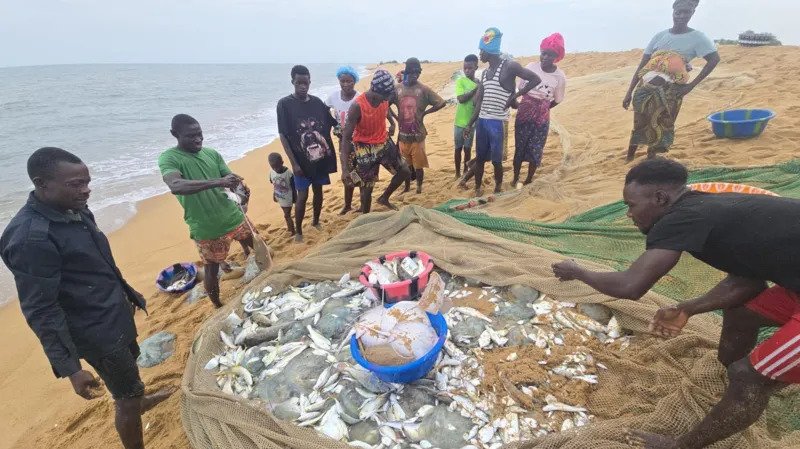
For generations, fishing has supported families on Sherbo Island in Sierra Leone. Every day, local fishermen work together to pull heavy nets filled with fish onto the shore. However, many say those catches have become much smaller over the past few years.
Residents believe illegal foreign fishing vessels are responsible for the decline. According to local fishermen, large industrial trawlers regularly enter protected coastal waters where commercial fishing is prohibited. As a result, traditional fishing communities are struggling to earn enough income.
Marie Pierre, a local resident, says foreign vessels continue to operate close to the shoreline despite restrictions designed to protect small-scale fishermen.
Fishermen Report Damaged Nets and Lost Income
Many fishermen claim the problem extends beyond reduced catches. Musa Gassimo says his fishing nets have repeatedly been damaged after being left overnight in the sea.
He explains that replacing a single net can cost around $250, creating a significant financial burden for families that already depend on limited daily earnings.
Several other fishermen have shared similar experiences. Some report that industrial trawlers cut through fishing gear, while others claim their small boats have been damaged after encounters with larger vessels at sea.
These incidents have increased operating costs and made it harder for local communities to continue their traditional way of life.
Illegal Fishing Remains a Major Challenge
Illegal fishing continues to affect many countries across West Africa. Experts estimate that a large share of the world’s illegal and unregulated fishing takes place in the region.
The practice costs West African economies billions of dollars each year. In addition, it reduces fish populations and threatens the food supply for millions of people who rely on seafood as a primary source of nutrition.
Local fishing leaders say the situation has shown little improvement in recent years despite ongoing concerns.
Fishermen Say Foreign Trawlers Ignore Protected Zones
Thomas Turay, President of Sierra Leone’s Fishermen’s Union, says catches for many local fishermen have dropped by nearly 40% in recent years.
He believes foreign trawlers frequently enter the country’s seven-mile coastal exclusion zone during the night. These protected waters are reserved for artisanal fishermen, but local communities say the rules are often ignored.
Fishermen working near Tombo Harbour also report seeing large industrial vessels waiting offshore before moving closer to the coast after dark.
Concerns Grow Over Foreign Fishing Fleets
Environmental groups say most industrial vessels operating illegally in the region are now linked to China, although ships from several other countries have also been reported over the years.
Campaigners argue that stronger enforcement and better monitoring are essential to protect marine resources and support coastal communities.
Without stricter action, they warn that illegal fishing could continue to damage fish stocks and weaken local economies.
Fishermen Call for Stronger Government Action
Many fishermen say they have reported their concerns to government authorities. However, they claim their complaints rarely result in meaningful action.
Some community leaders believe weak enforcement and corruption have allowed illegal fishing to continue. They are urging authorities to strengthen patrols, enforce fishing regulations, and protect the livelihoods of local fishing families.
For many coastal residents, protecting Sierra Leone’s waters is not only an economic issue but also a matter of preserving their traditions and ensuring future generations can continue to make a living from the sea.